

 Connected







 Remind Me Later


GP1Scale selector (1-5)Target: 4


I have a lack of energy.
AUTOMATION
IF
Add conditionWhatAnswerOperatorBelow targetMissingValue4


THEN
DoNotifyWhereIn-app mailWhoResearchers, +1
THEN
DoSend follow-upWherePatient appWhatPhysical Wellbeing
The problem
Cancer research studies collected data between visits on paper forms. Participants, health coaches and researchers each needed their own view of the same study.
Product design lead for nine months, working with Dr. Tracy Crane and Grey Freylersythe at Sylvester: the participant app, the coaching workspace and the research tools.
Used in NIH-funded cancer trials at Sylvester, including weekly remote coaching in TEAL.
Where it’s used
Hours of LIvES coaching conversations, analyzed by Sylvester’s researchers with NLP and machine learning.
Of TEAL’s first 60 participants chose to take part in Spanish. TEAL uses My Wellness Research for weekly remote coaching.
Research network






Three audiences, one platform
Daily check-ins, wearable sync and trends. Closer to Noom than a clinical tool, and forgiving for hands numbed by chemotherapy.
Video calls, messaging and scheduling, with the participant’s profile and goals beside the conversation.
Study arms, a modular assessment library, and the targets, triggers and rules that act on what comes in.
Follow-up rules
A missing answer triggers two distinct actions: notify the research team through in-app mail, and send a follow-up to the participant app. Condition, destination and recipient stay visible, so a researcher can inspect the rule and change it.
The research workspace, rebuilt in code from my original designs. The tour plays on its own; open it to try it yourself.
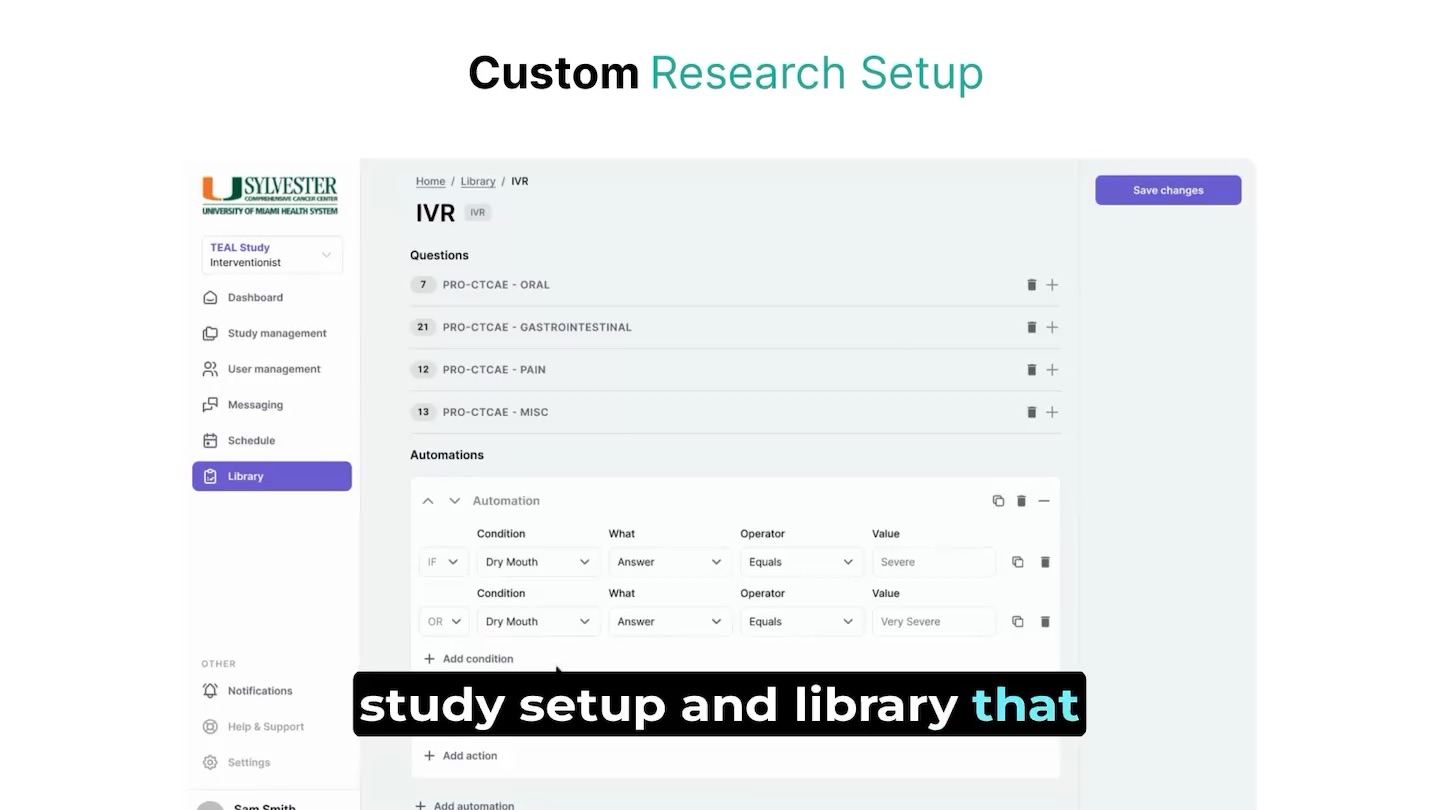
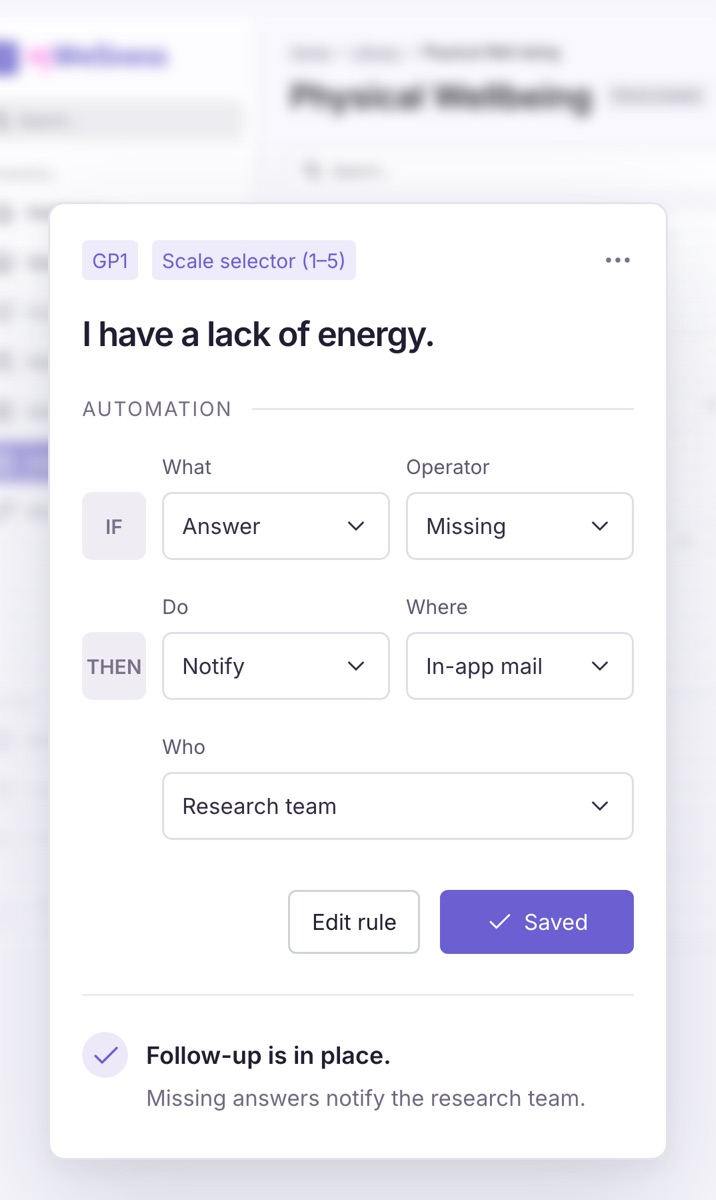
Study setup and the automation library, from the 2023 product walkthrough. The same follow-up rule, composed for a phone.
The coaching experience
The call sits beside the participant’s goals, profile and internal notes. A coach can record a touchpoint during the conversation and keep the follow-up connected to the participant’s history.
A Record Touchpoint toggle, internal notes and a goals sidebar.
The product decisions
Separate an assessment from the studies that use it. Keep questions, subsets and study associations visible while configuring the module.
Name the trigger, destination and recipient for each action. Staff notification and participant follow-up have separate, inspectable settings.
Carry the participant’s history and goals into messaging and calls, then give the team a place to record the next touchpoint.
Credits
Interfaces on this page are rebuilt in code from my original designs; names and values in them are sample prototype content.