Clarvos
Agents for advertising and business growth
Founding product design lead · Discovery to launch · 2024 – 2026Inside the product
The problem
Small businesses have big dreams. But advertising is hard, and founders want to focus on their product or service. They may lack clarity on who to target, how to optimize their messaging, and how to attribute upstream marketing to the sales pipeline. When every dollar counts and time is limited, Clarvos wins.
Founding product design lead, from discovery to launch. Product strategy, UX design, full UI design system, feature discovery and usability testing.
Public launch in 2026, covered by BusinessWire, and a successful GTM/EAP program.
Agentic mode
I designed an agent that turns a business goal, like “get more inbound calls,” into a cross-platform media campaign that’s ready to run.
Describe the goal and the agent proposes the objective, optimization, conversion tracking, placements and budget, each set the way the publisher expects it and each one visible beside the conversation.


Impact
Reduction in campaign setup time versus manual
More creative variants tested with persona modeling
Increase in ROAS, proven uplift in creative performance
Deeply understanding a client’s brand context
Signals, audiences and campaign decisions. One connected view.

Brand identity with Brightscout ↗ which I extended into the product design language
From research to scale
- Research
Start with the business owner
Interviews and moderated sessions with owners and marketers. Many research participants were less skeptical than we anticipated, and simply asked how to sign up. This led to our first early access beta program.
- Design
I designed an agentic onboarding and campaign flow
Users provide a URL and the agents go to work, understanding and building out their business context. At checkpoints, users provide clarification and steering. This leads to campaigns ready to run, staged on social platforms like Meta, TikTok, Google, and Pinterest. Users stay in the driver’s seat with choices visible and editable.
- Validate
Product-market fit
I tested code prototypes with customers until our process aligned with their mental models, keeping familiar controls they like from tools like Facebook Ads Manager, while also simplifying and streamlining the things they don’t like, such as choosing settings they don’t fully understand, like conversion goals, bid strategies, dayparting, and other in-flight optimizations. I designed an experience that keeps them in control, but pushes some of the more complex settings “under the hood” so they can just provide a budget.
- Beta
Learning with early access partners
Daily use taught me that users really want to start with organic posting to run experiments before moving into paid social. They also asked for a conversational workspace familiar to them from ChatGPT and Claude, and they wanted to build creative to capitalize on trending topics. I designed a framework for creative aesthetics and parameters, which are encoded into the weights of our specialized models working with the ML team.
- Launch
Out of beta
We launched in 2026 and started taking on our first paying clients. The first ten clients worked with our in-house performance marketing team alongside the automation suite, so that we could ensure a positive concierge experience, but also so that we could continue to identify any real-world gaps that needed to fold back into the product. I continued to run product discovery and testing during this process, often riding along with clients to observe directly what was working and what was missing.
Discovery by prototype
Each test and learn cycle informed refinements to the feature set, as well as shaping feature discovery.
Two ways to launch
Agentic when you want help. Manual when you know exactly what you want.
As trust in agents increases, most owners want the agent to do the setup. However, many power users have run Facebook’s Ads Manager for years and want to do their own thing. Clarvos supports both ways of working, with the same campaign model.
Manual mode is the setup flow customers use today. Agentic mode is my design for the chat-based experience that is more proactive, where users provide steering and preferences as well as goals. Users can run both strategies in parallel.
Manual mode
For people who know Ads Manager, the same campaign set by hand.
Manual setup keeps its guardrails. Save with the Pixel ID empty and the form names the missing conversion tracking requirement where it can be repaired. Switch to Awareness and only the relevant settings are shown. The payload sent to the platforms is handled behind the scenes, providing a streamlined user experience.
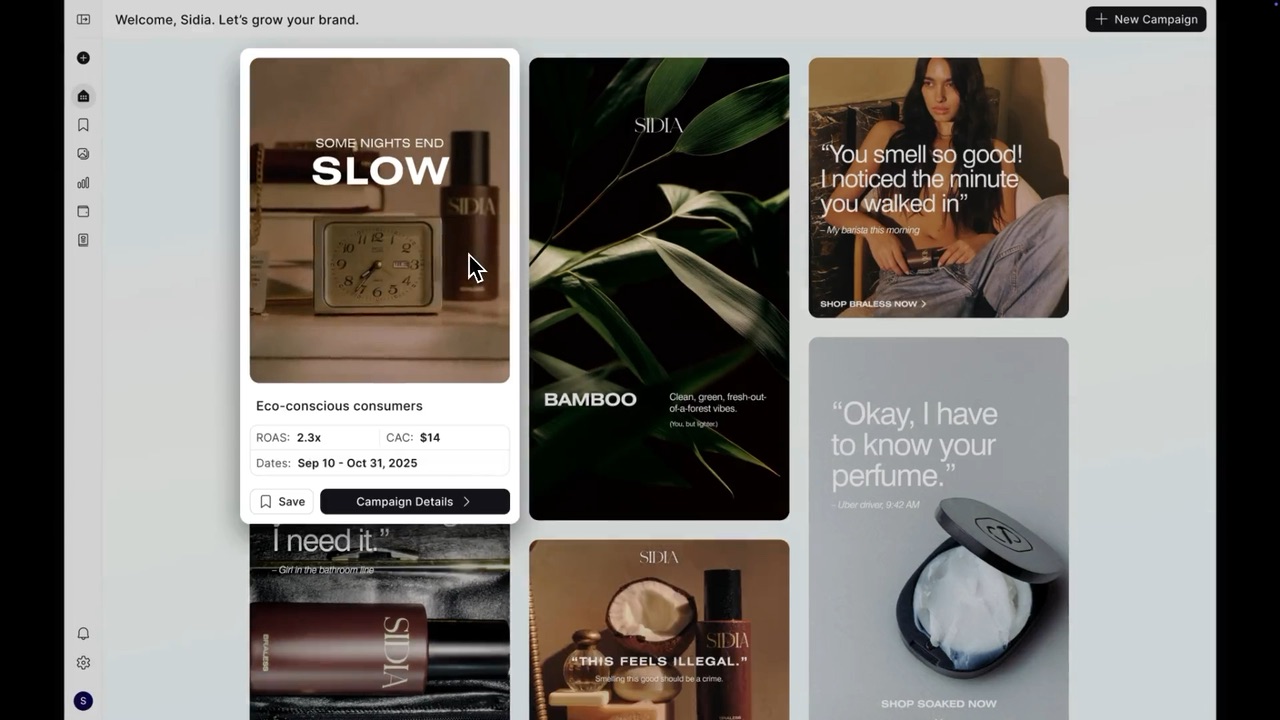
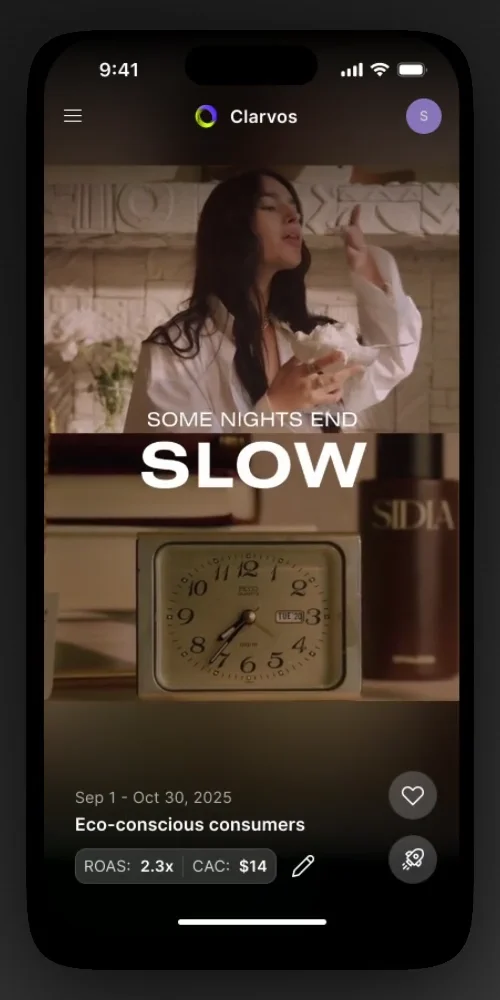
Creative that starts with what’s already working, in the feed and on the phone.
Designing trust
A system that acts as your proxy, based on your intent.
The agent sets up the campaign, but every choice it makes stays visible and editable beside the conversation.
Every asset gets a quality score that combines AI analysis. But these aren’t generic models; they have specific preference sets encoded into their weights. This allows us to offer a unique value prop beyond generic system prompts: our personas reflect the preferences of the research participants we observed, which means their predictions are more accurate and lead to better performance.
The campaign loop
Set up context. Then the agents keep improving it.
Agentic or manual, setup ends in a publisher-ready campaign. From there the agents make creative from the business’s context, score it before it runs, watch performance, move budget to what’s working and carry what they learn into the next round.
- Campaign setupagentic or manual
- Generate creative
- Judge before it runsscore, then improve ↑
- Launch
- Monitor performance
- Rebalance and optimize
- Continual learninground again → Generate creative
Optimize creative
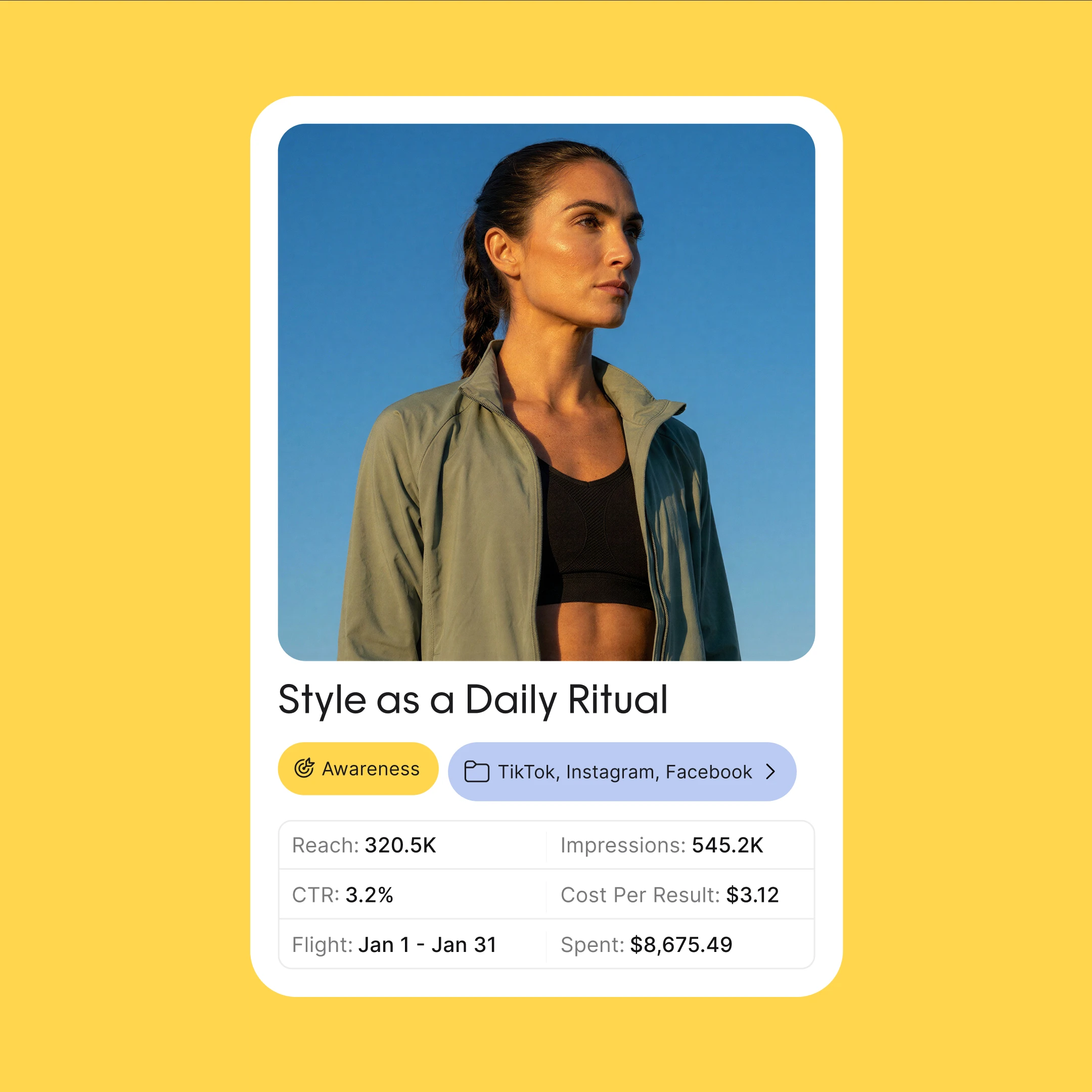
The agents score a creative, then improve it.
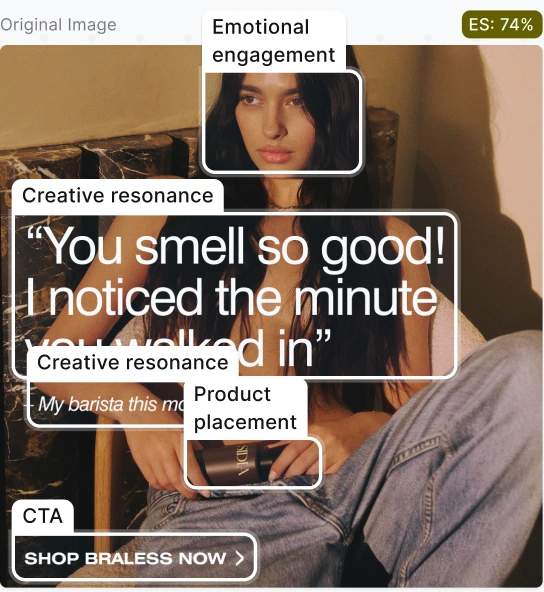
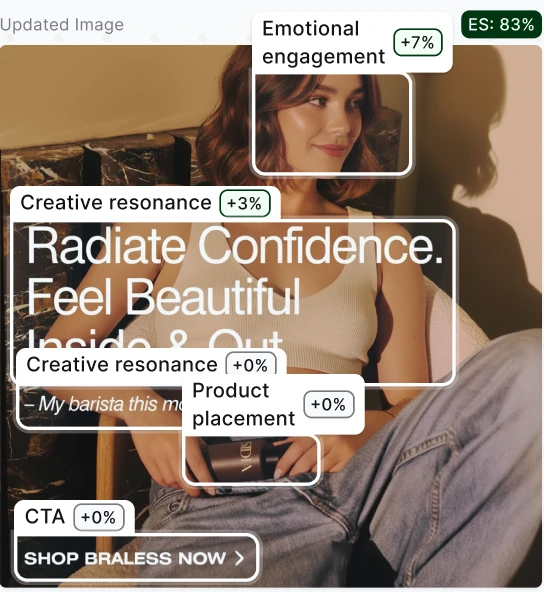
Emotional engagement score before and after the agents’ edit.
Discovered in beta
Early access partners showed us what to build next. They posted organically before they ever paid, they wanted to talk to the product, and they wanted to know what was trending.
Trending topics
What’s moving in your category, and why it matters to you.
Organic, then paid
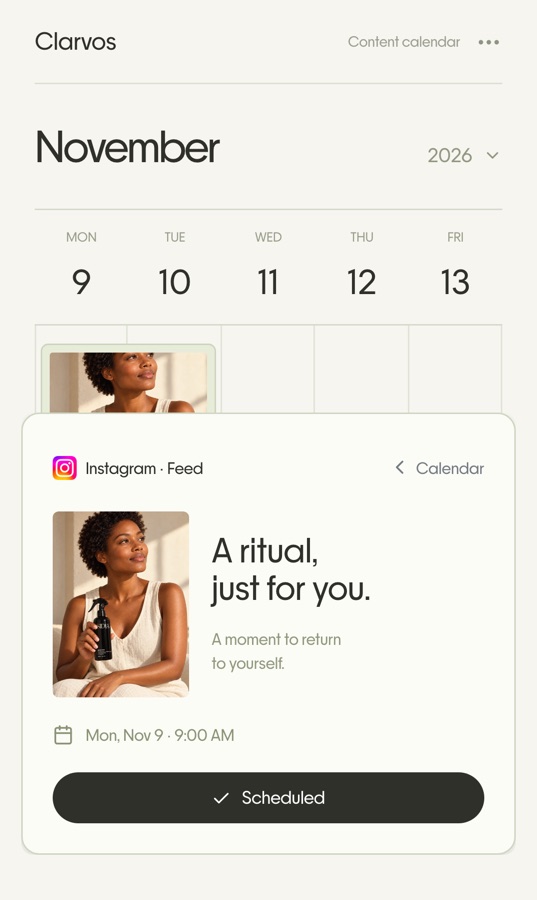
A month of content. A new source of learning.
Move from month to week to the post. Refine a scheduled caption, inspect a published winner, then carry its creative and evidence into a new paid campaign.
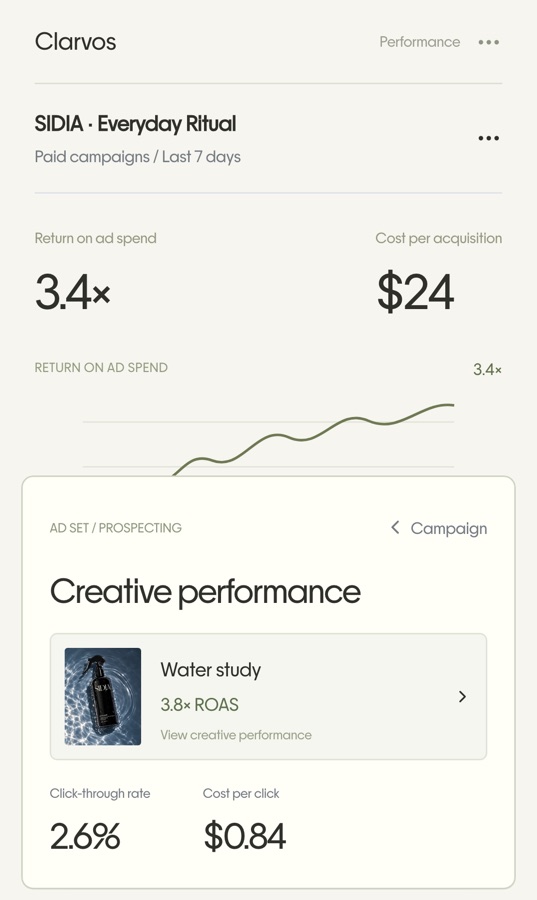
Performance
A trend and a quantity answer different questions.
Compare movement with magnitude, choose the measures that matter, then drill into each publisher’s ad groups.
What we tested
Moderated research at a co-creation session with users.
- 01
Manual alongside agentic
Marketers with existing assets wanted manual flows too, so every tool also works on its own.
- 02
An explanation one click away
Even users who say “just handle everything” trust it more when they can see why.
Credits
- Role
- Product design lead
- Work
- Discovery, interaction design, prototyping, product UI language, design system
- Worked with
- The CEO, CTO and CPO, product managers, engineering, AI/ML, brand and go-to-market
- Brand identity
- Brightscout
- Brands
- Dunkin’, purely elizabeth, PCG
- Launch coverage
- BusinessWire, SiliconANGLE, MarTech Series