
- Client
- Wild Brains, now Atlas
- Role
- Lead designer
- Stage
- Seed round
- Platform
- iOS
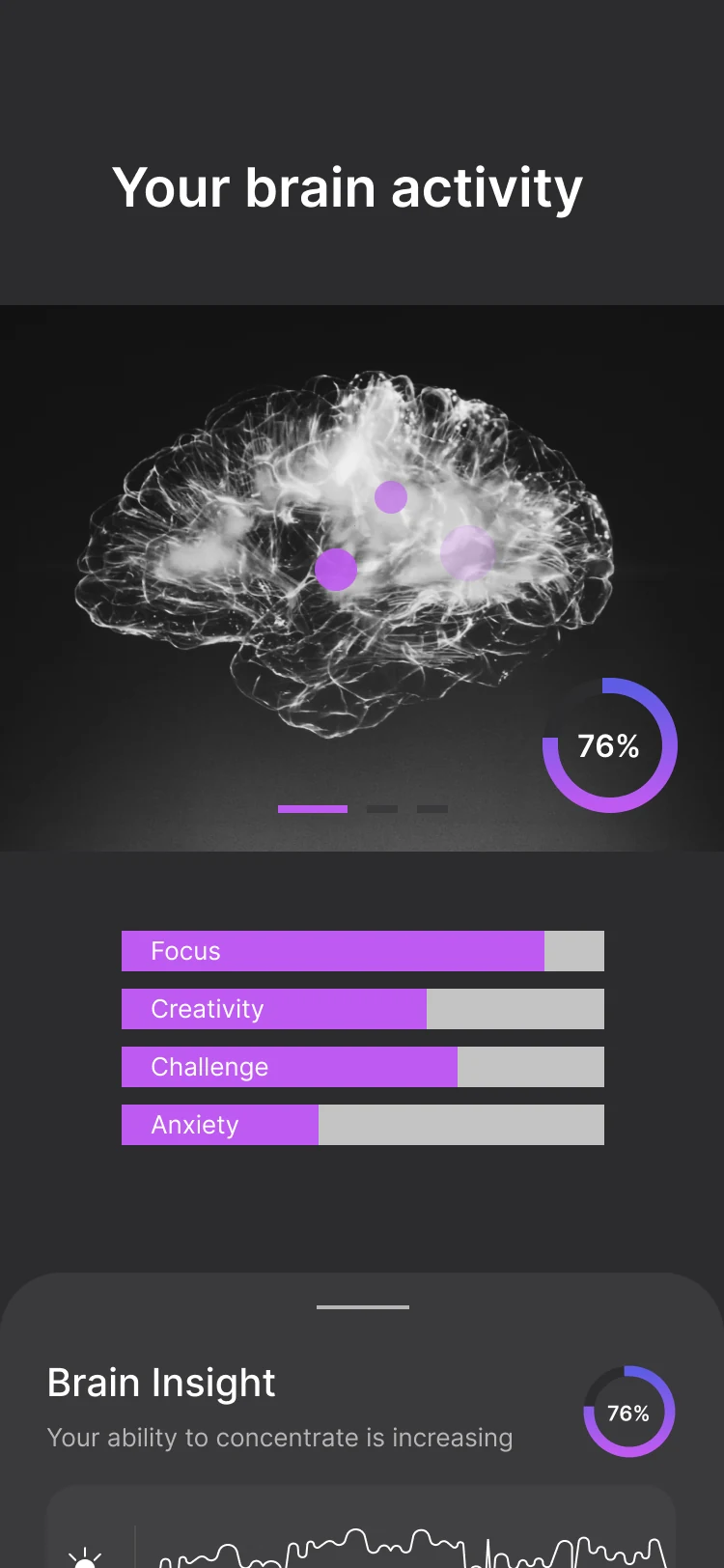
Built from the original anatomical view. The motion is illustrative, not measured brain activity.
The problem
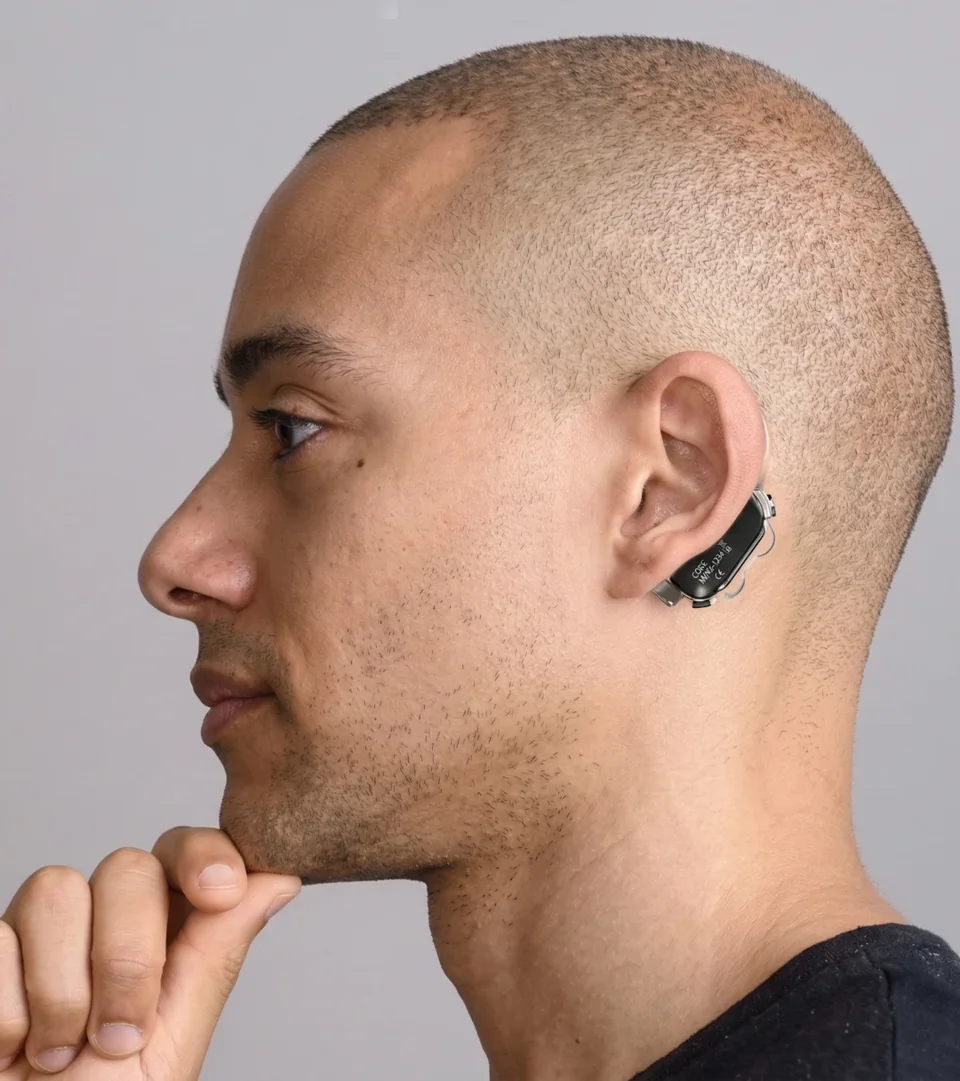
A wearable that reads your brain, and an app that trains it. The challenge: make brain data understandable to people who aren’t neuroscientists.
Lead designer from discovery through definition: the initial UX and research, the original UI and the investor pitch deck, working directly with the founder and a small engineering team.
The research, UI and pitch deck I designed helped secure the seed round. The company launched as Atlas in 2026.
Discovery through definition
From the first sketches to a product vision for investors.
- Listen
Generative interviews
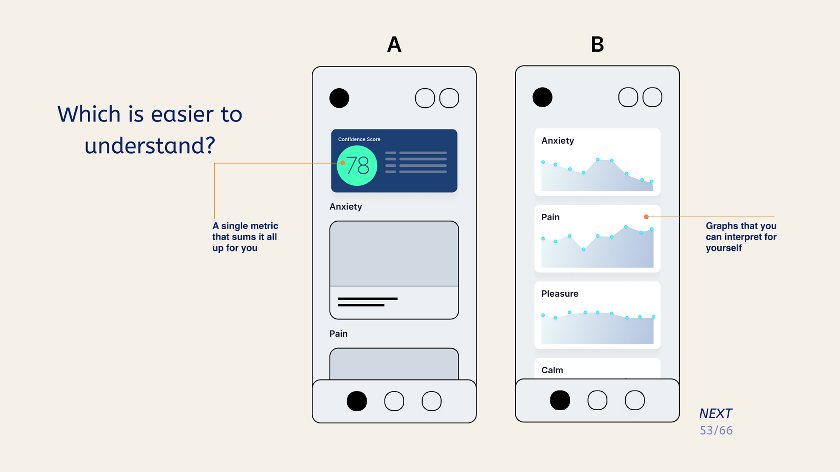
I ran moderated and unmoderated research to get a sense of whether people would feel comfortable tracking brain activity. And for those who are, I learned to what degree they wanted to see multiple metrics, versus seeing a single score. The most interesting finding was that people didn’t want to chase vanity metrics; in fact they wanted to treat it more like learning piano: a long-term investment built on daily habits, but without too much judgment about doing it right or wrong. We reoriented the experience around growth, self-care, and self-awareness.
- Imagine
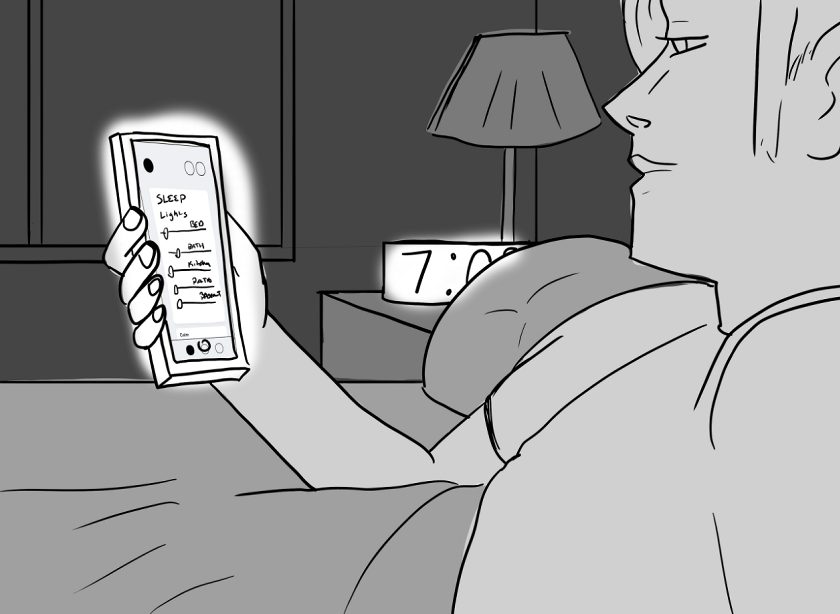
My storyboards
Brian, the quantified self, wants to become “the best possible version of himself.” His storyboard follows him before, during and after the headband. It turned out that this persona was not our ICP: we shifted to focus on users who have more open-ended growth goals for personal wellness and self-care.
- Map
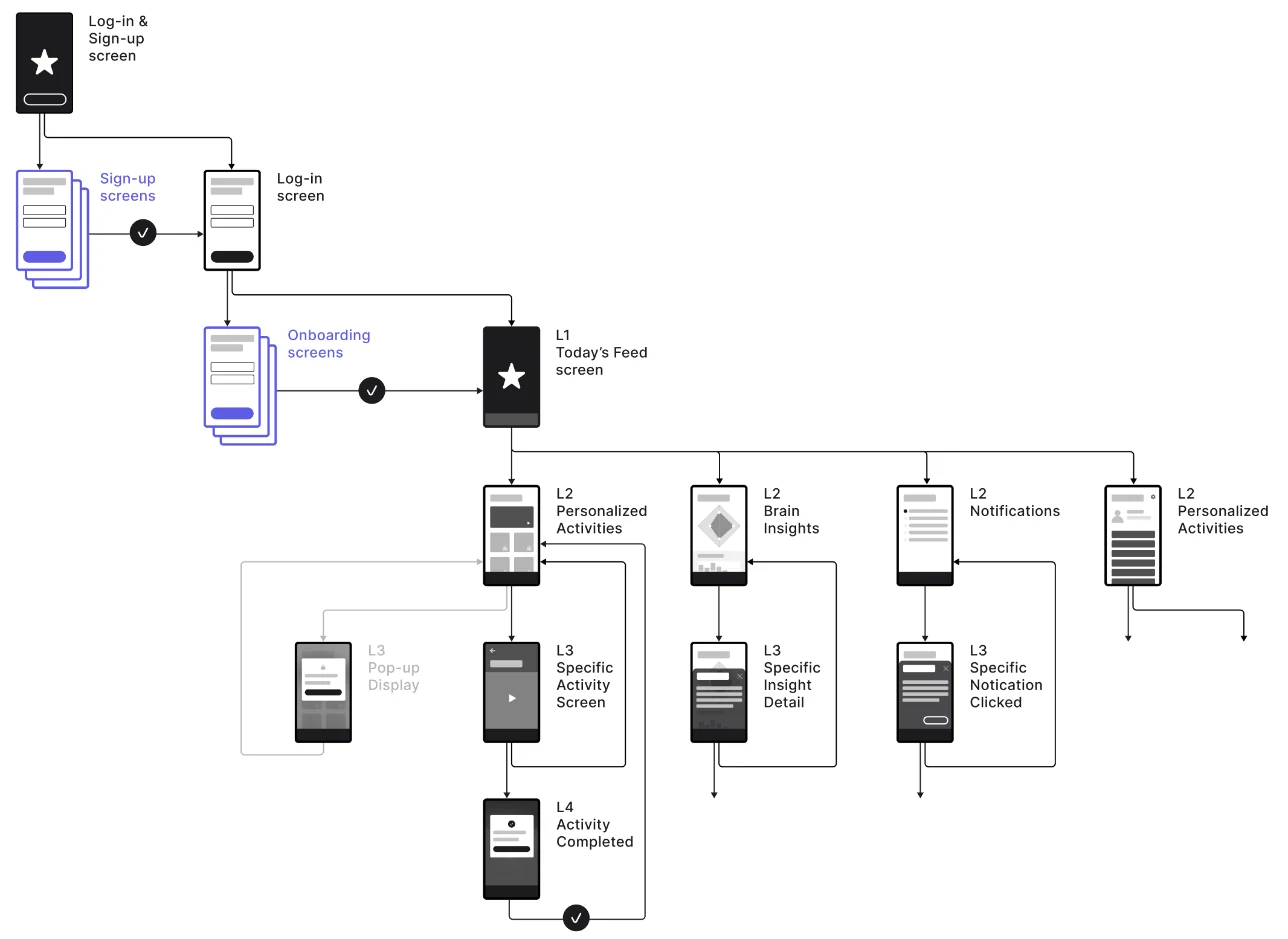
A site map
Today’s feed at the center. Personalized activities, brain insights and notifications one level down, and every completed activity leading back to personalized activities.
- Connect
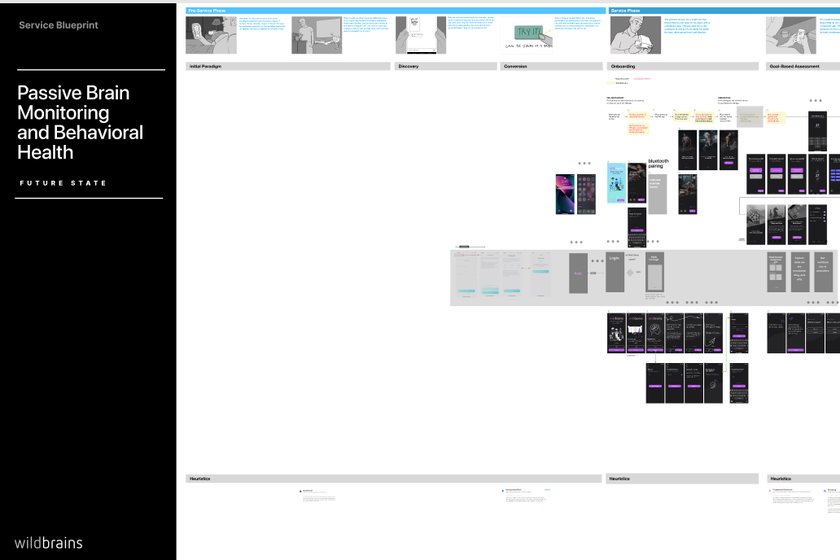
A service blueprint
Passive brain monitoring and behavioral health, future state: the storyboard’s moments lined up against the screens they need, from discovery and conversion to onboarding, assessment and continuous monitoring.
- Pitch
The investor deck
Research, the original UI and the pitch deck I designed put a concrete product in front of investors.
What we learned
Users cared more about daily rituals than vanity metrics.
- 01
Understanding what users prioritize
Interviews explored anxiety, everyday triggers, joy and personal goals. The person’s context came before any performative metrics.
- 02
Representation: a progress number, a pattern, or guidance?
I explored designs showing a single score, detailed graphs, or verbal language that could guide an action: different ways to understand progress.
- 03
What is worth sharing?
A high score, better focus, or improving sleep. The contrast helped us look past performance for its own sake. The interesting conclusion was that sharing metrics fed directly into the anxiety users wanted to tame in the first place!
The flow
From a first goal to a daily path, in five phases.
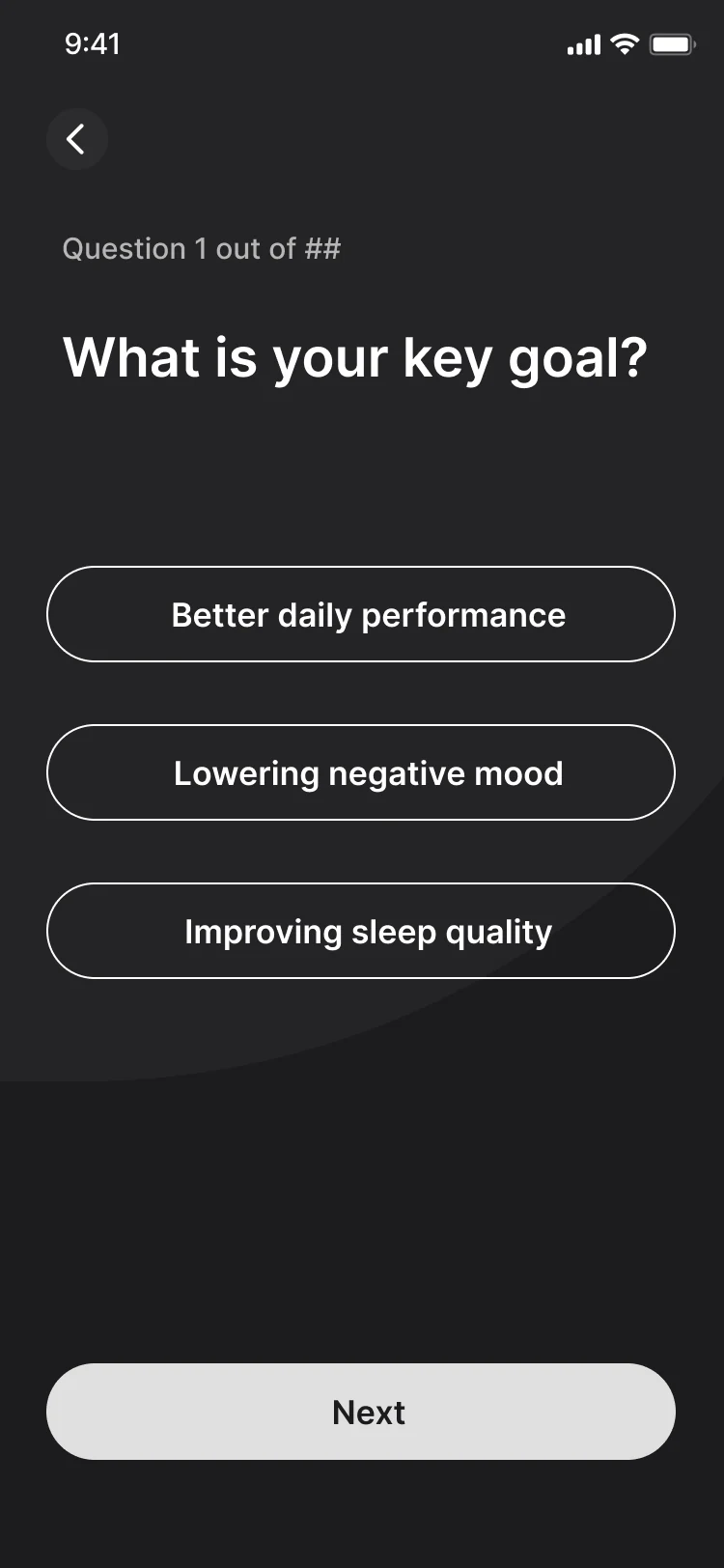
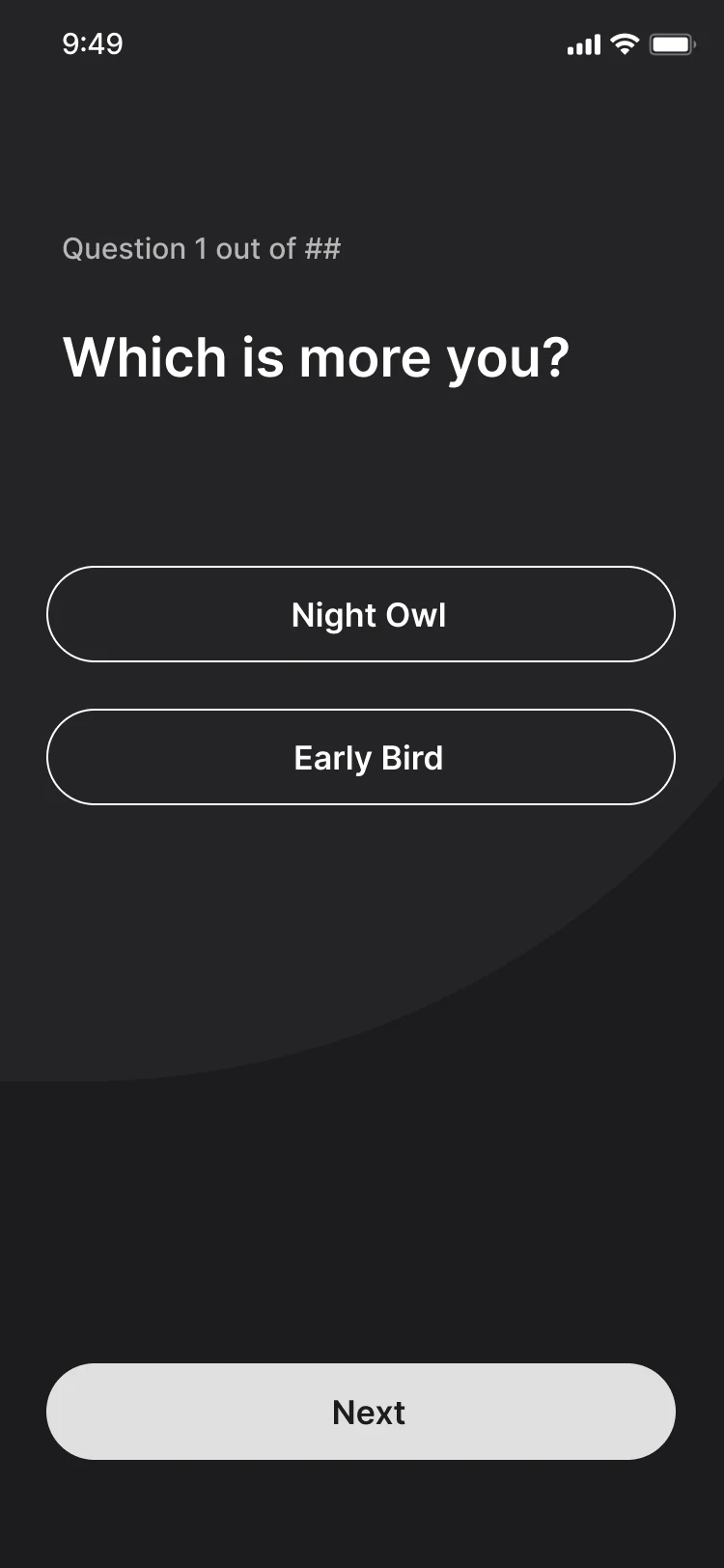
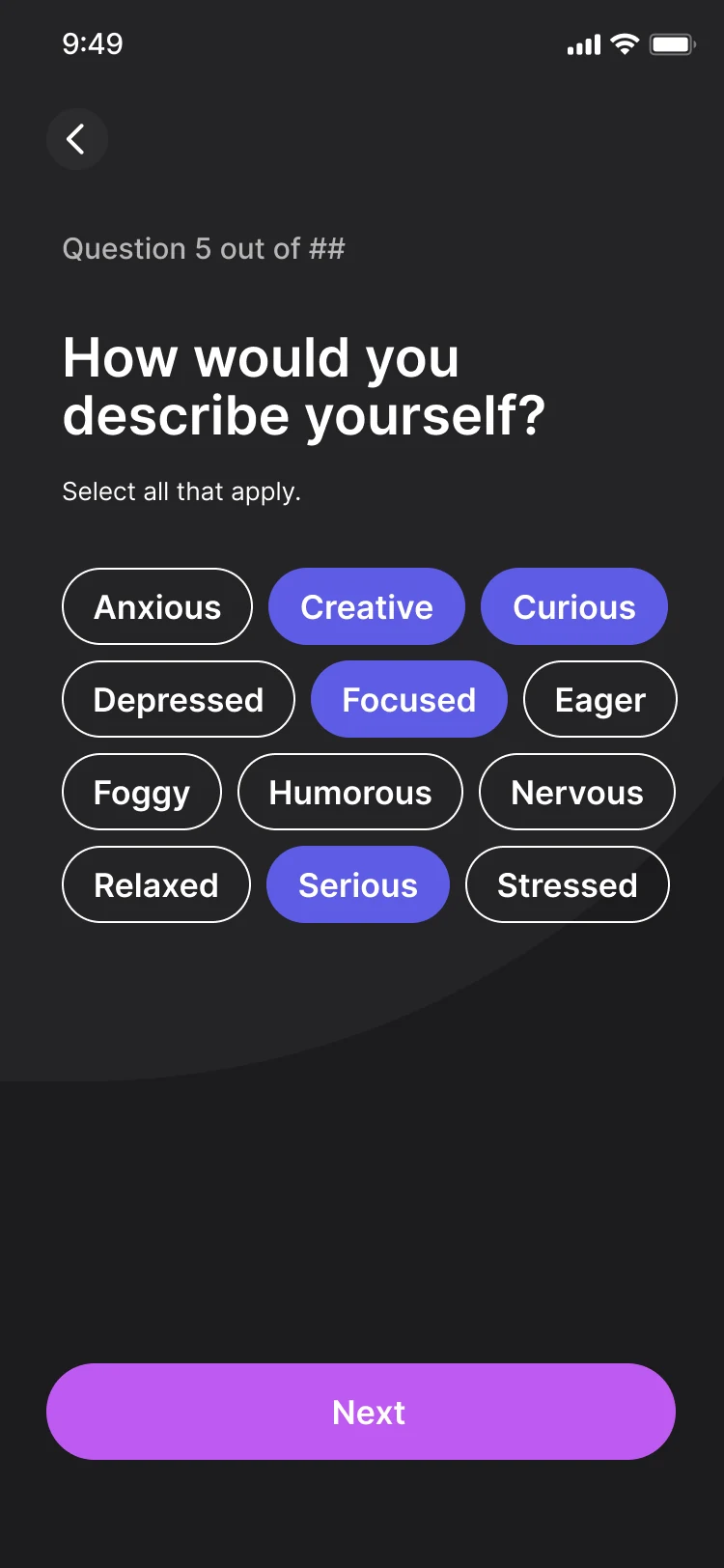
A new user sets a goal and answers questions; a returning user logs straight in to the daily path. These paths are based on findings in neuroscience that the brain needs a certain amount of challenge, variety, and surprise.
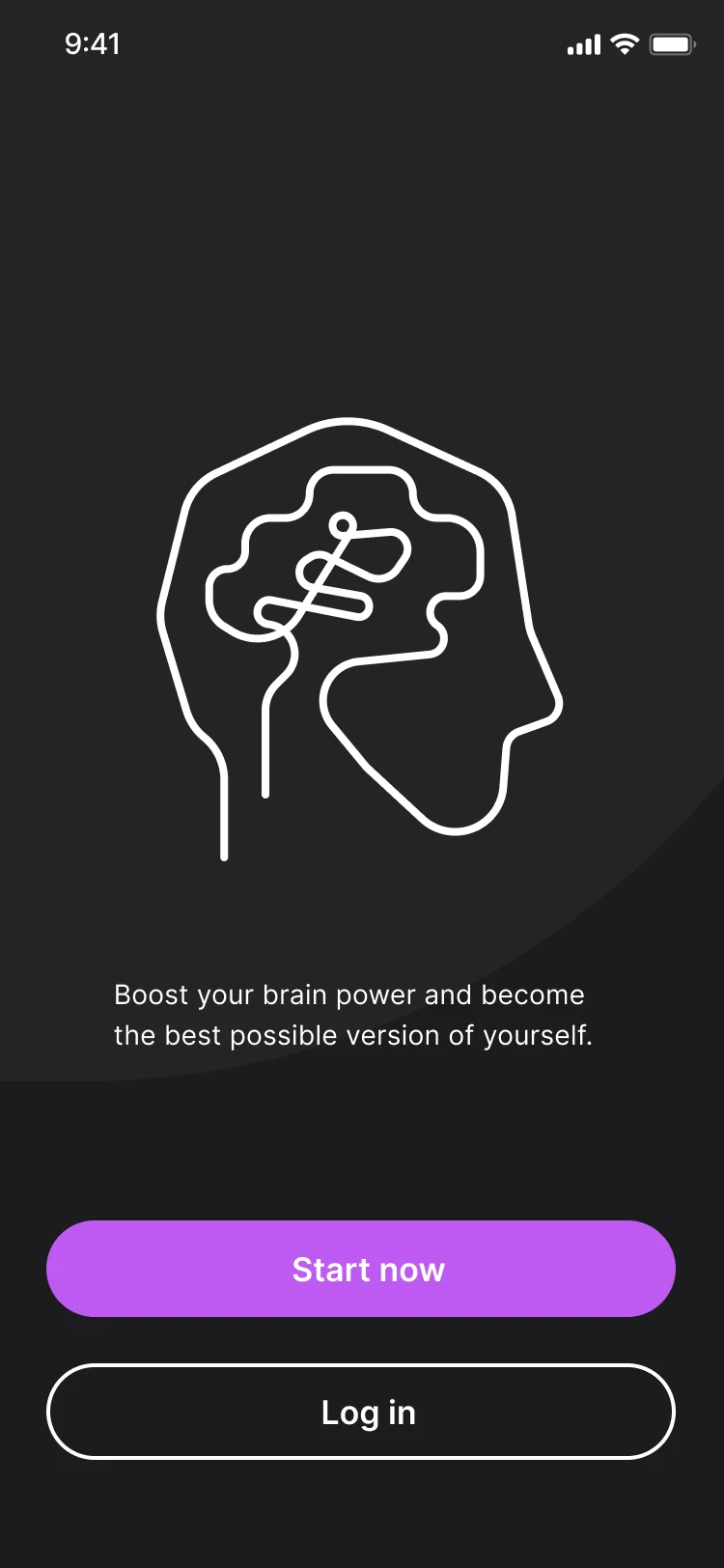 Introduction
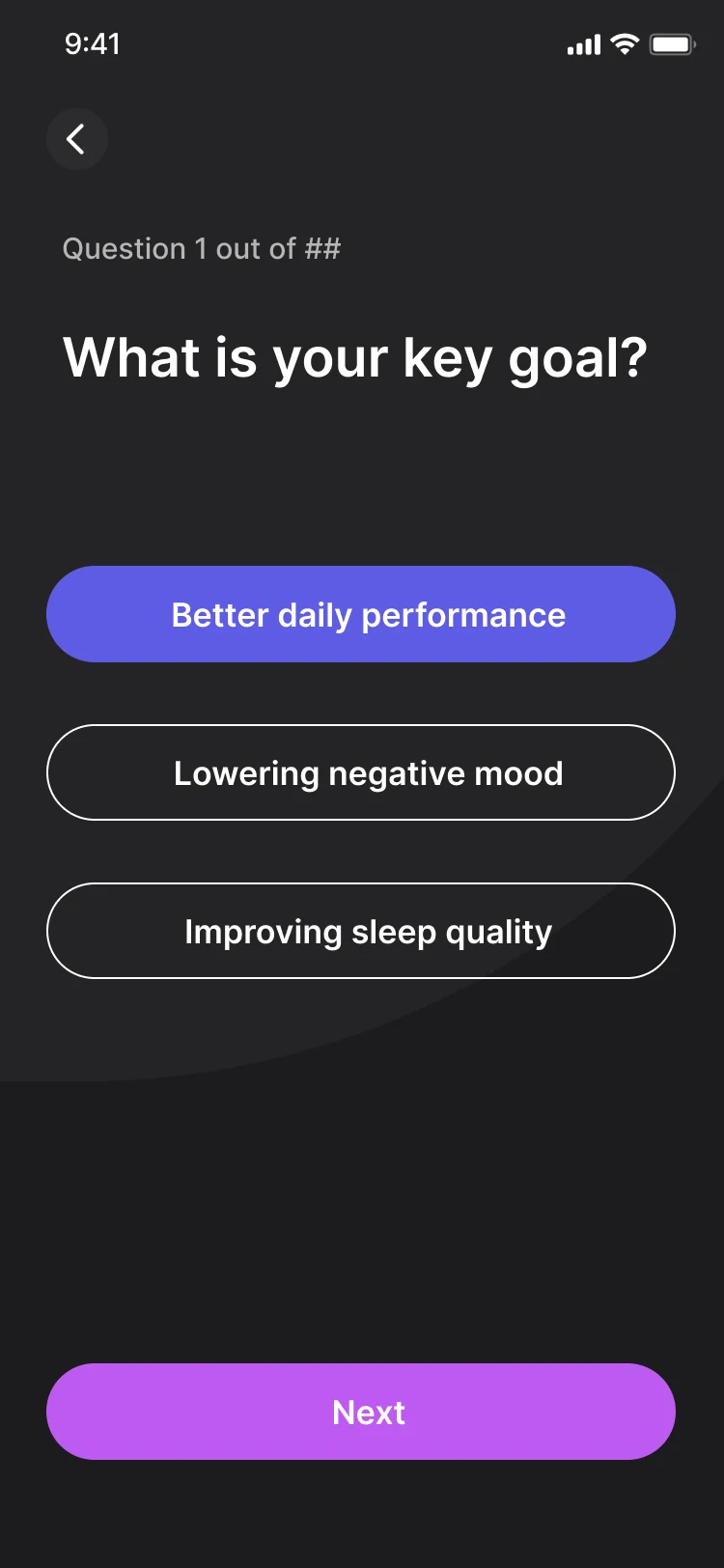 Primary goal
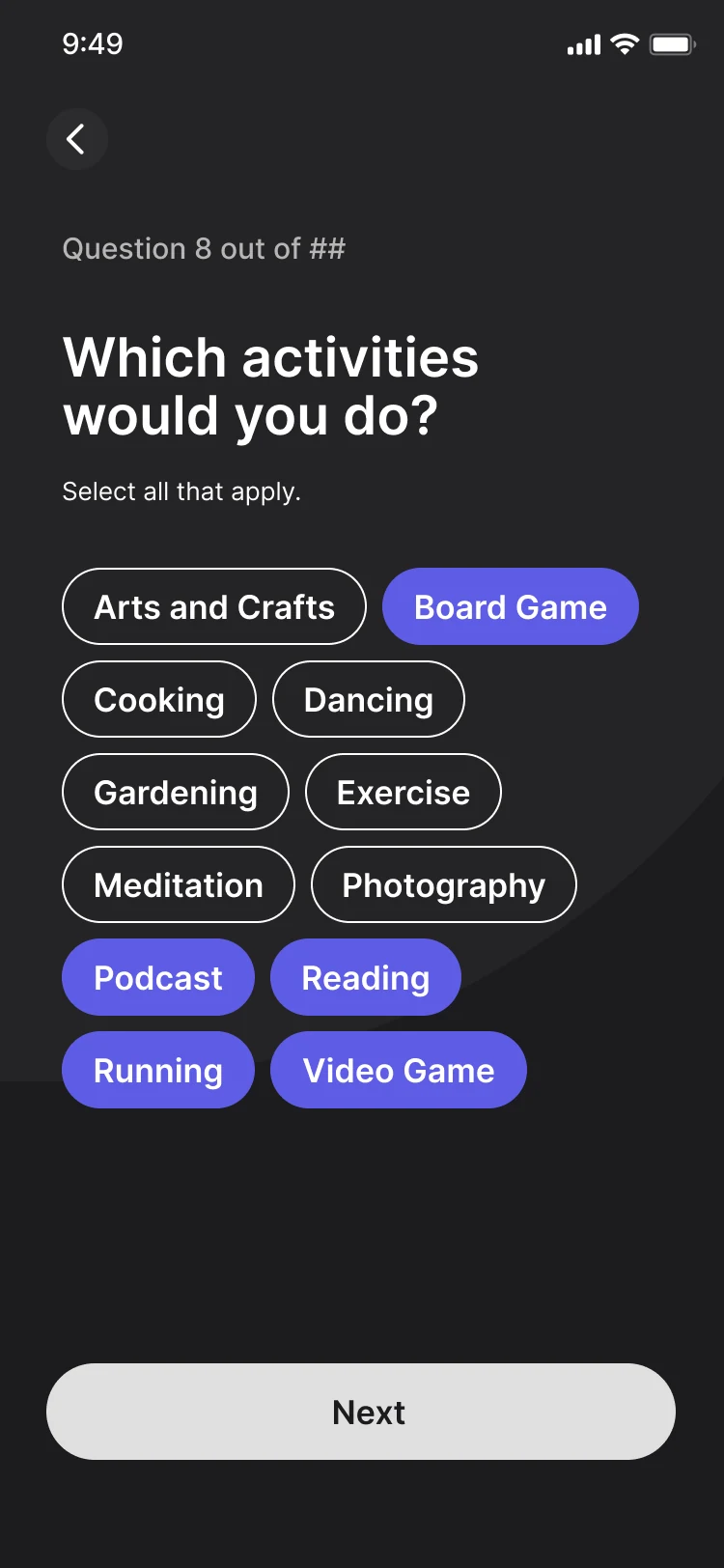 Activities
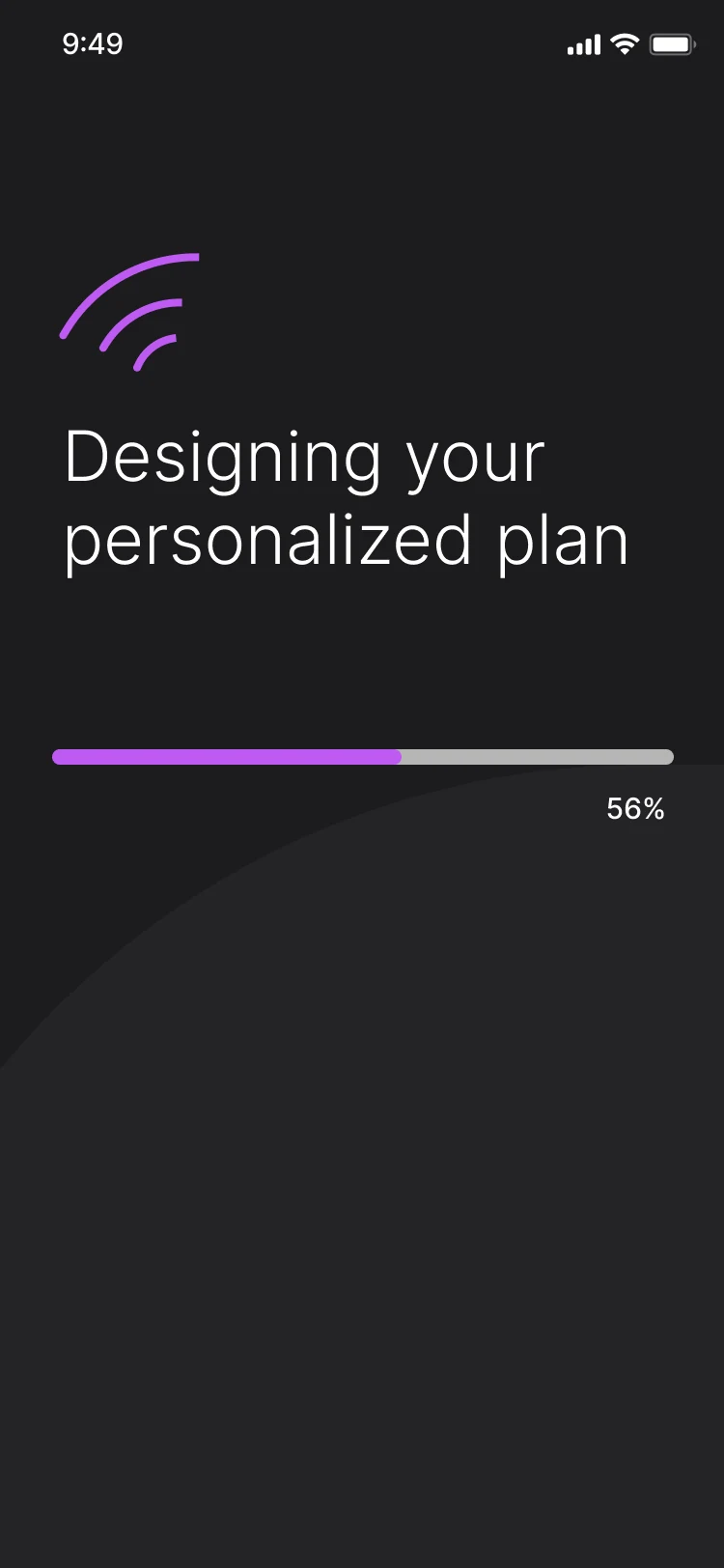 Your plan
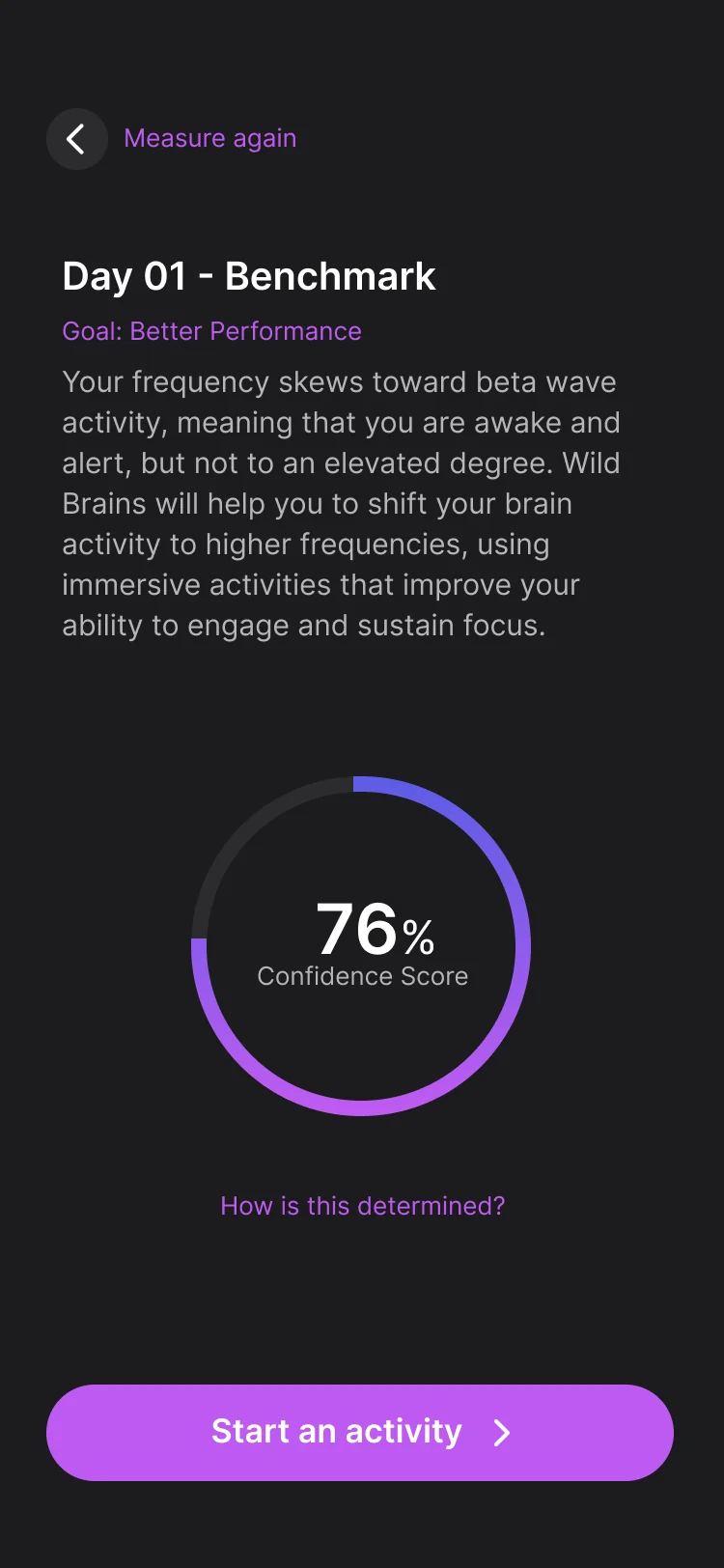 Benchmark
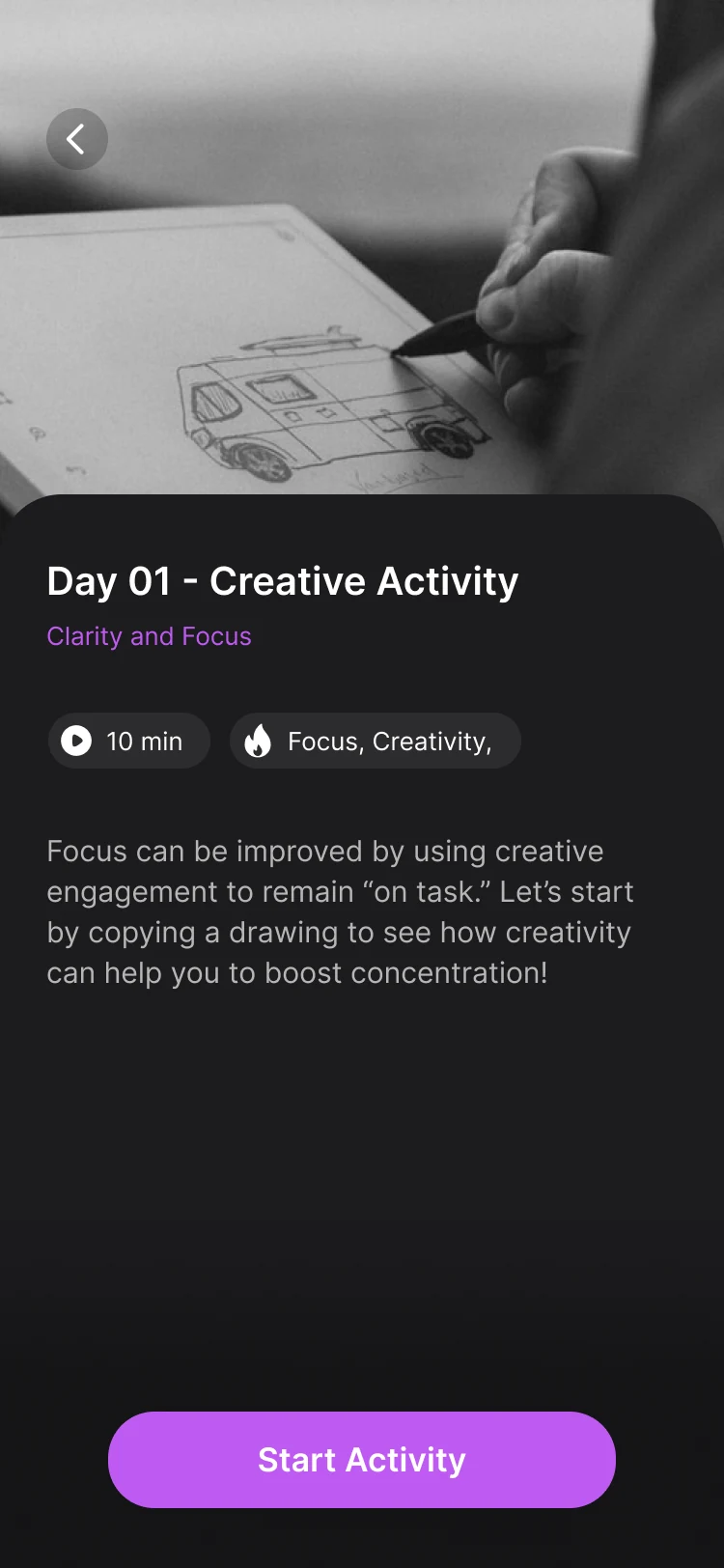 Daily activity
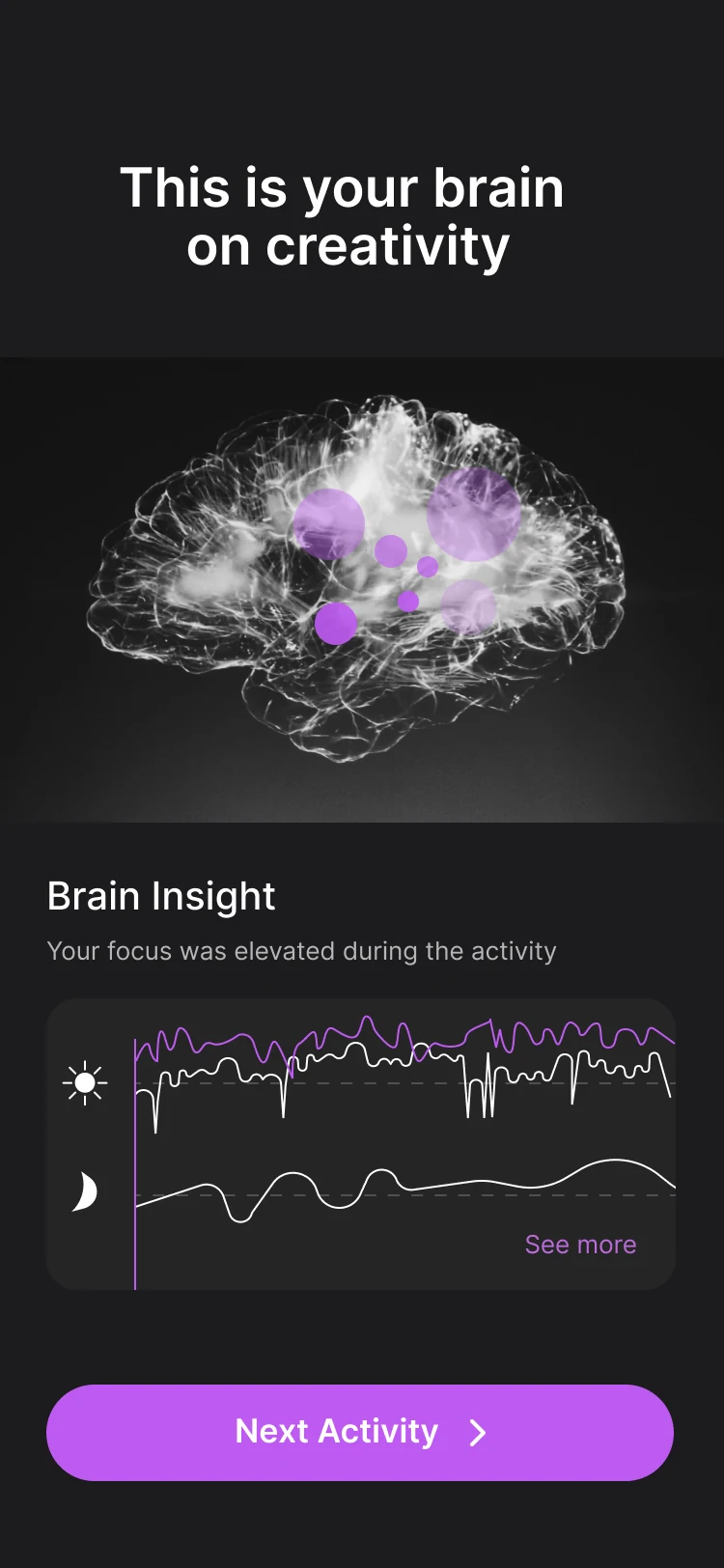 Brain on creativity
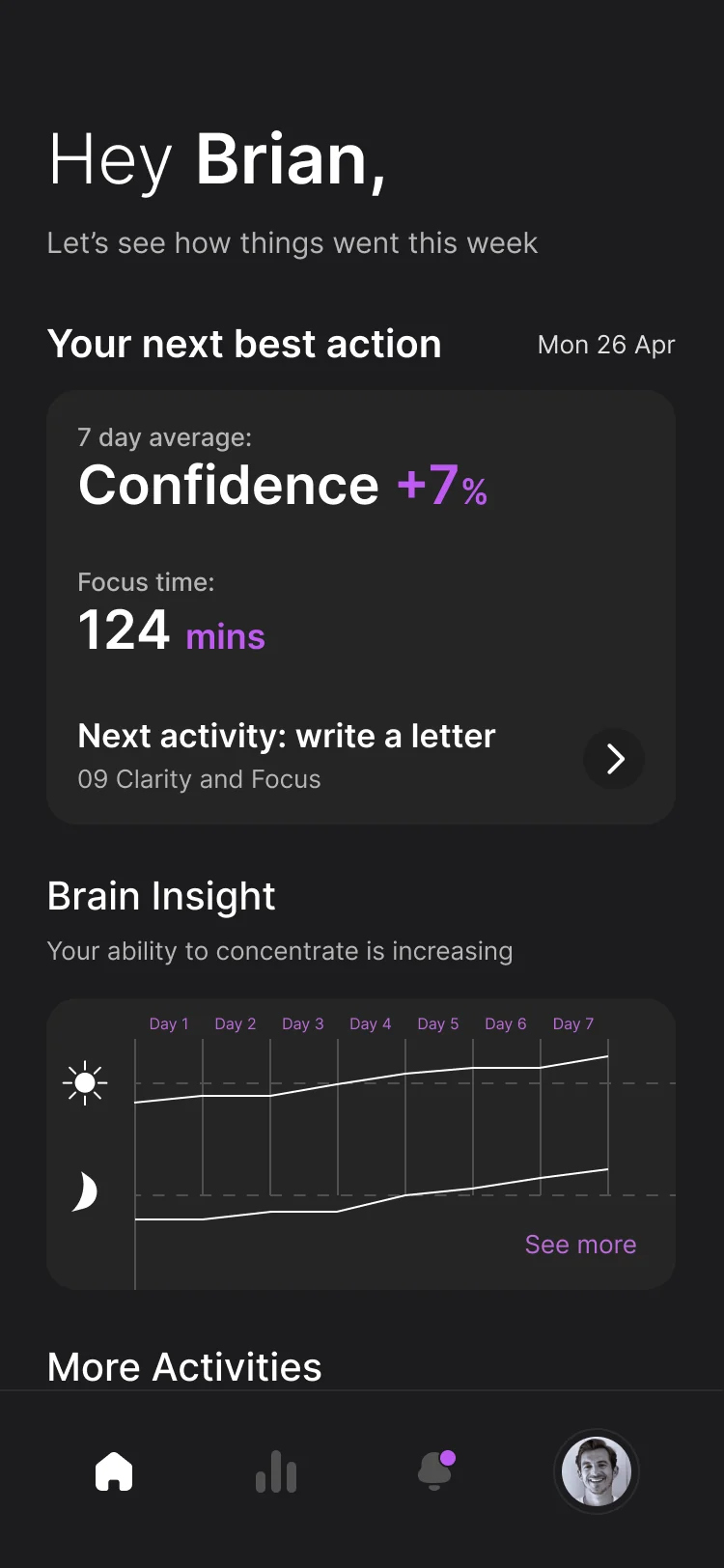 Daily dashboard
From the simplified experience in Figma
Your brain
Making brain data visible as biofeedback.
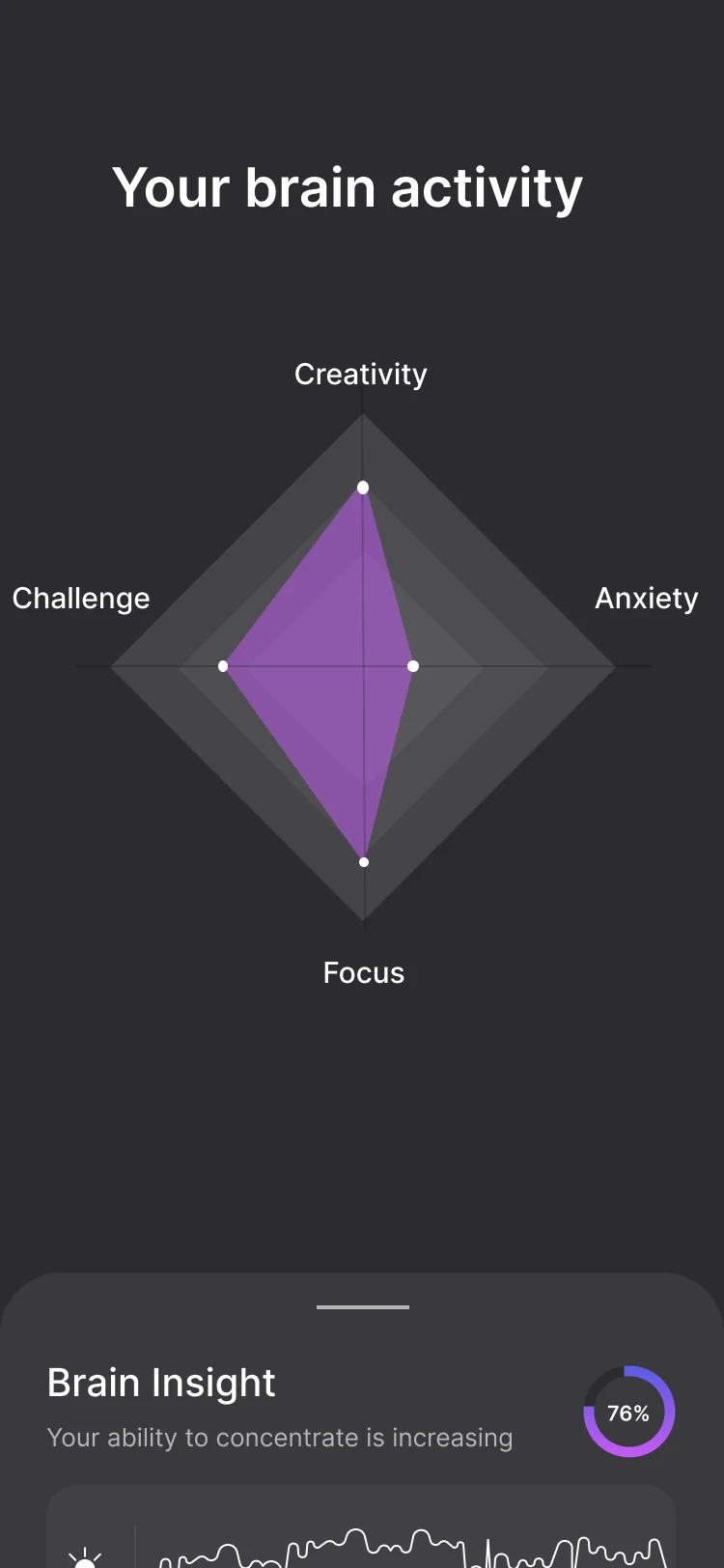
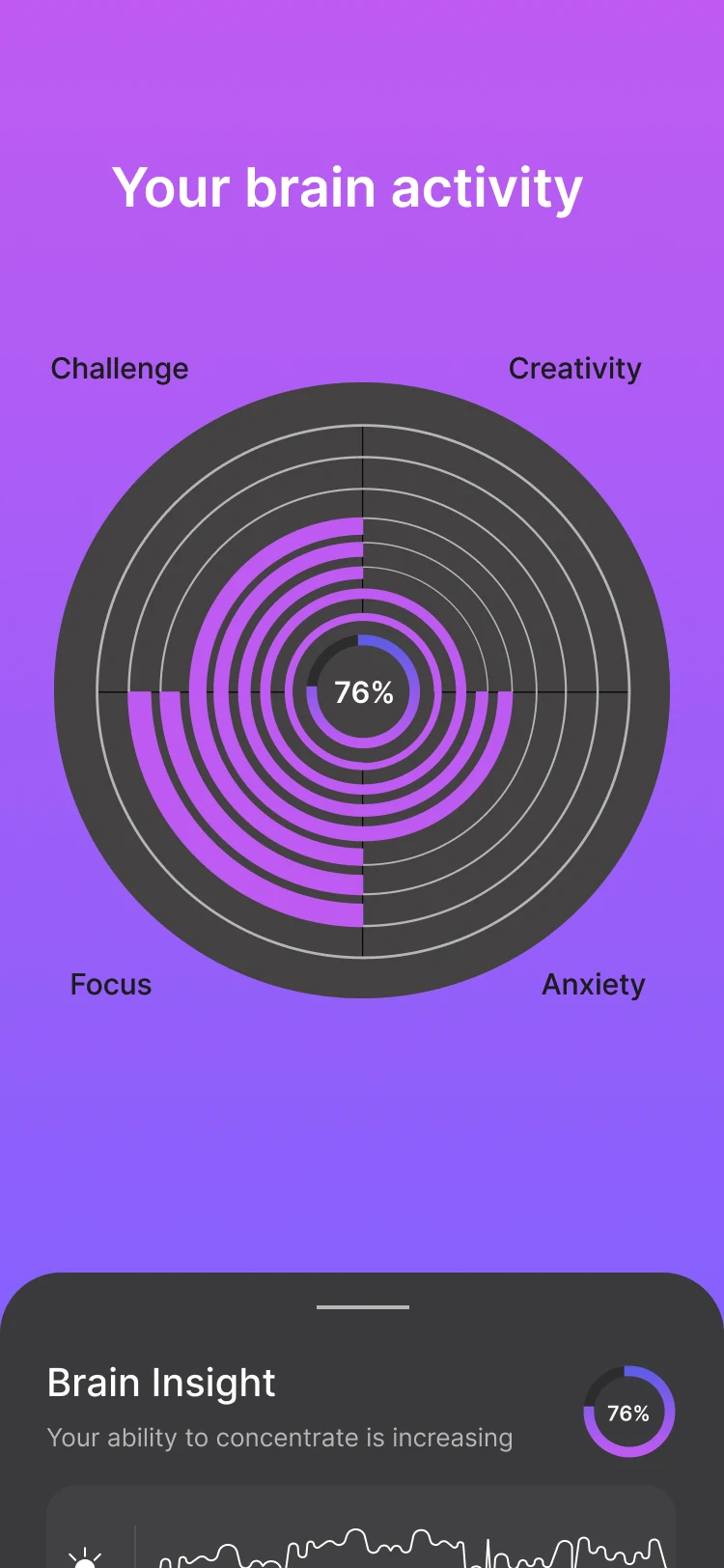
The radar chart works for an at-a-glance profile but is not easily legible. I shifted to a more conceptual 3D rendering that creates an emotional connection, since the main user behavior to reward is simply that they continue to try the experiences on their journey. For example, playing music, drawing, or exercising, at key intervals.
Prototype
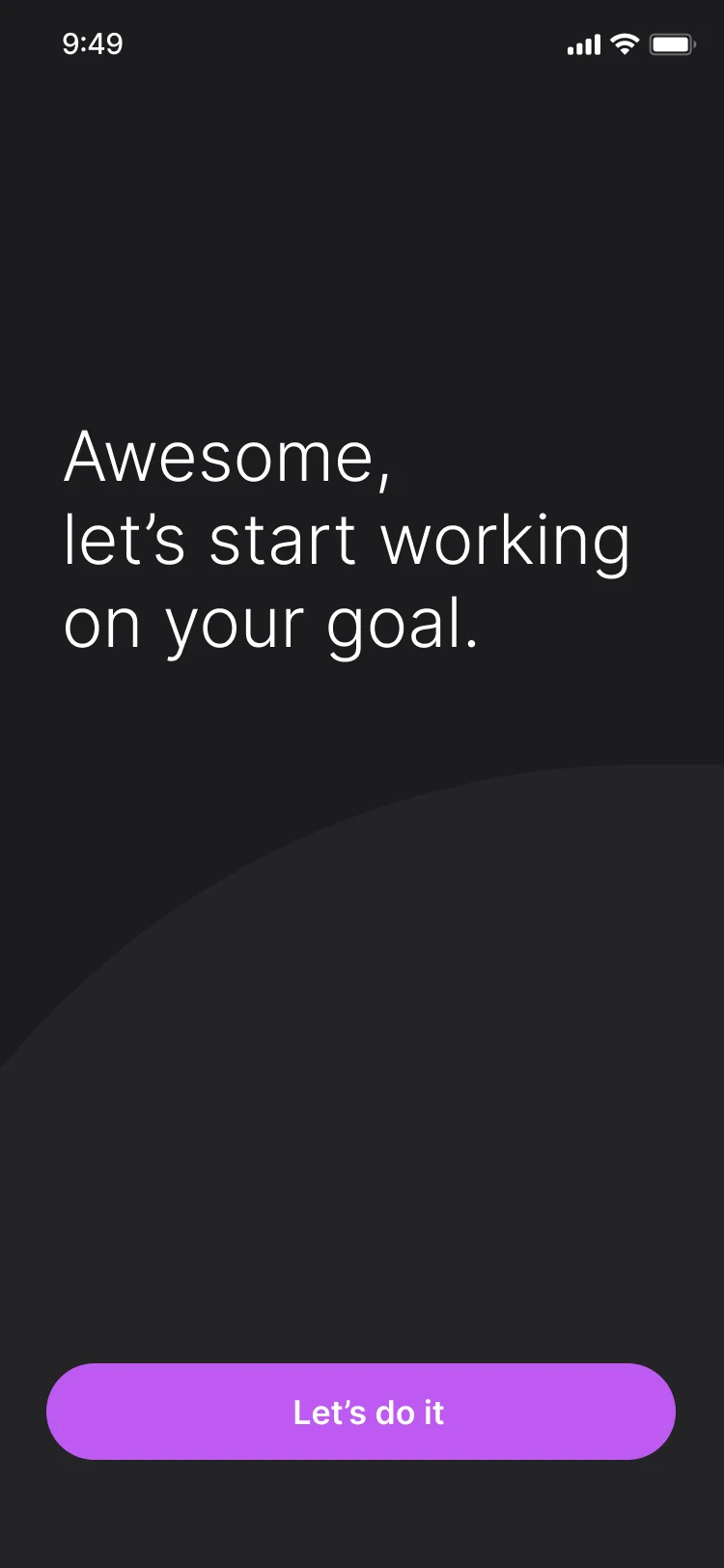
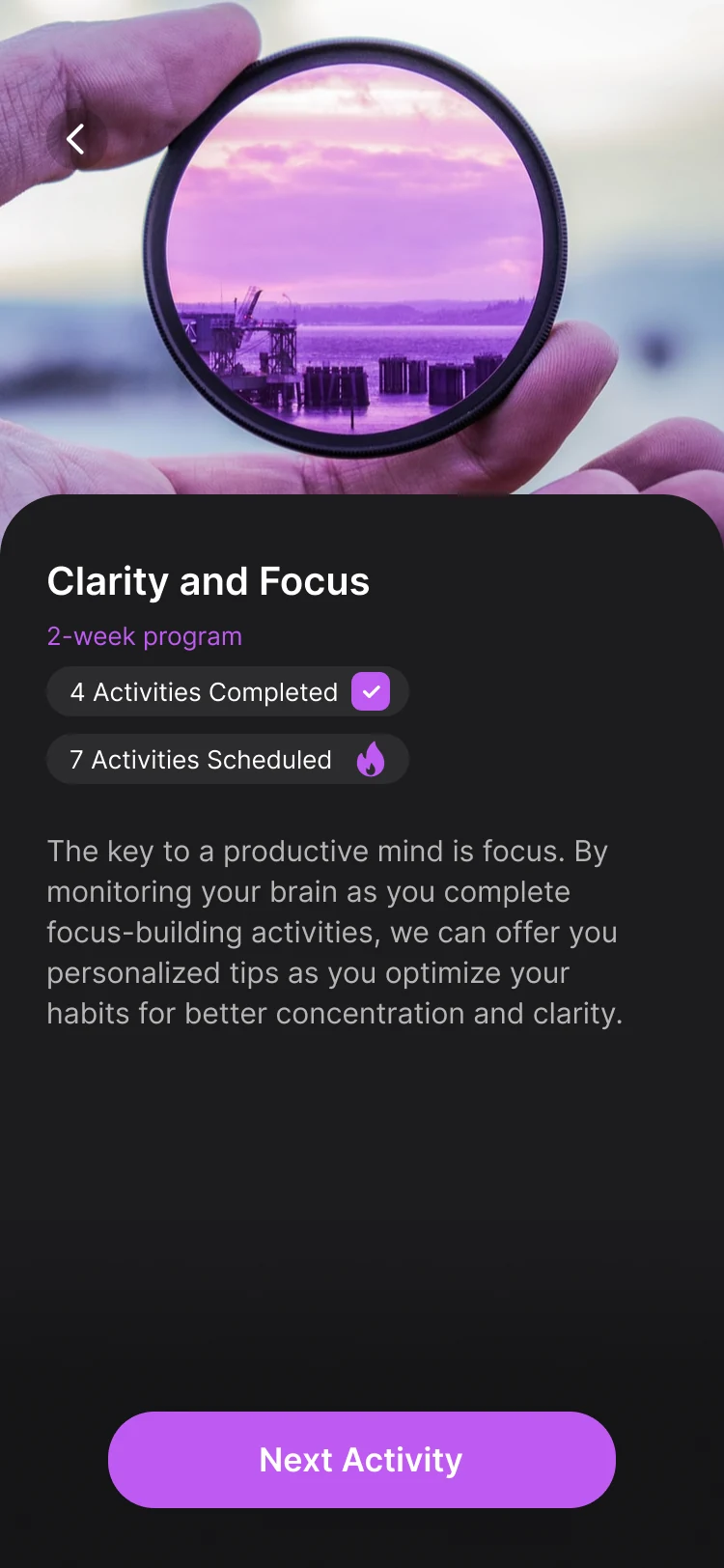
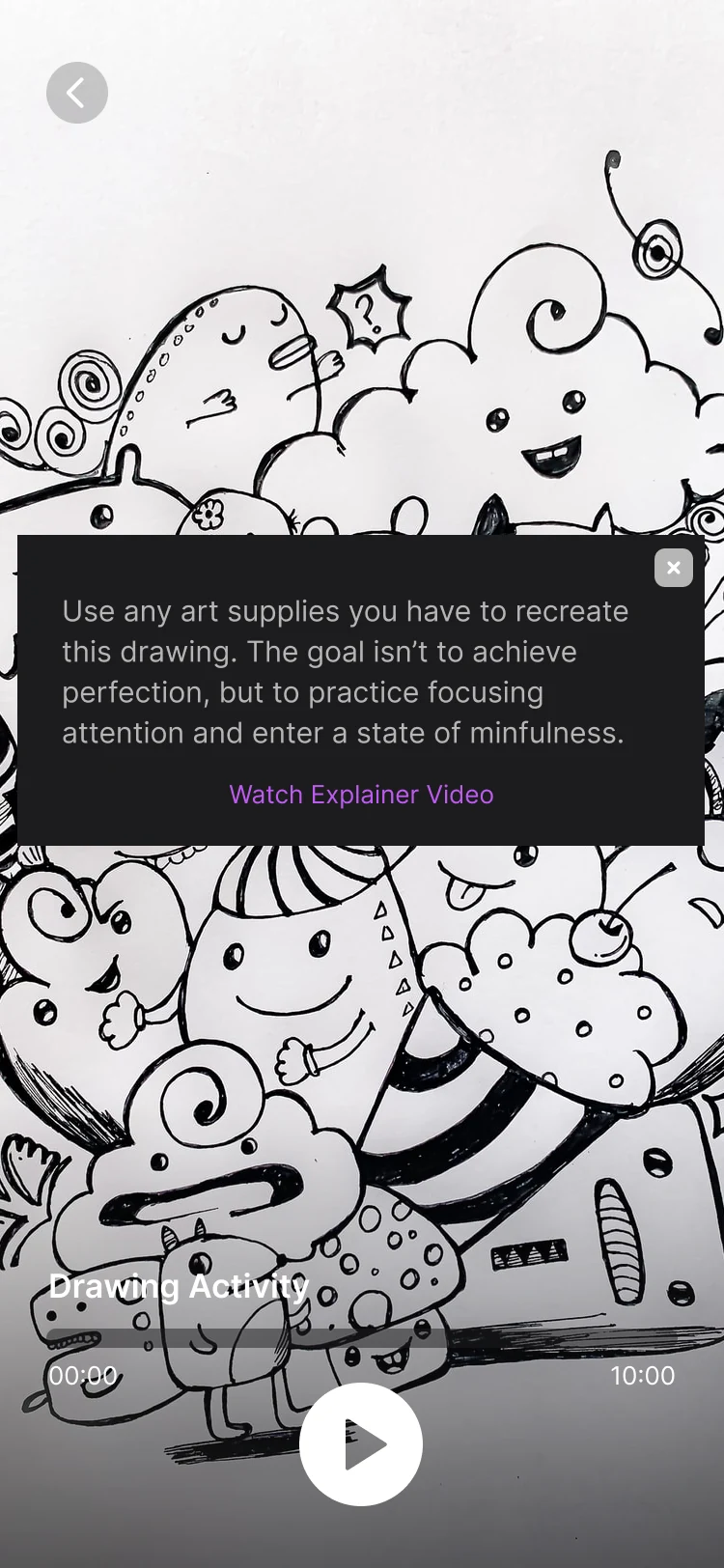
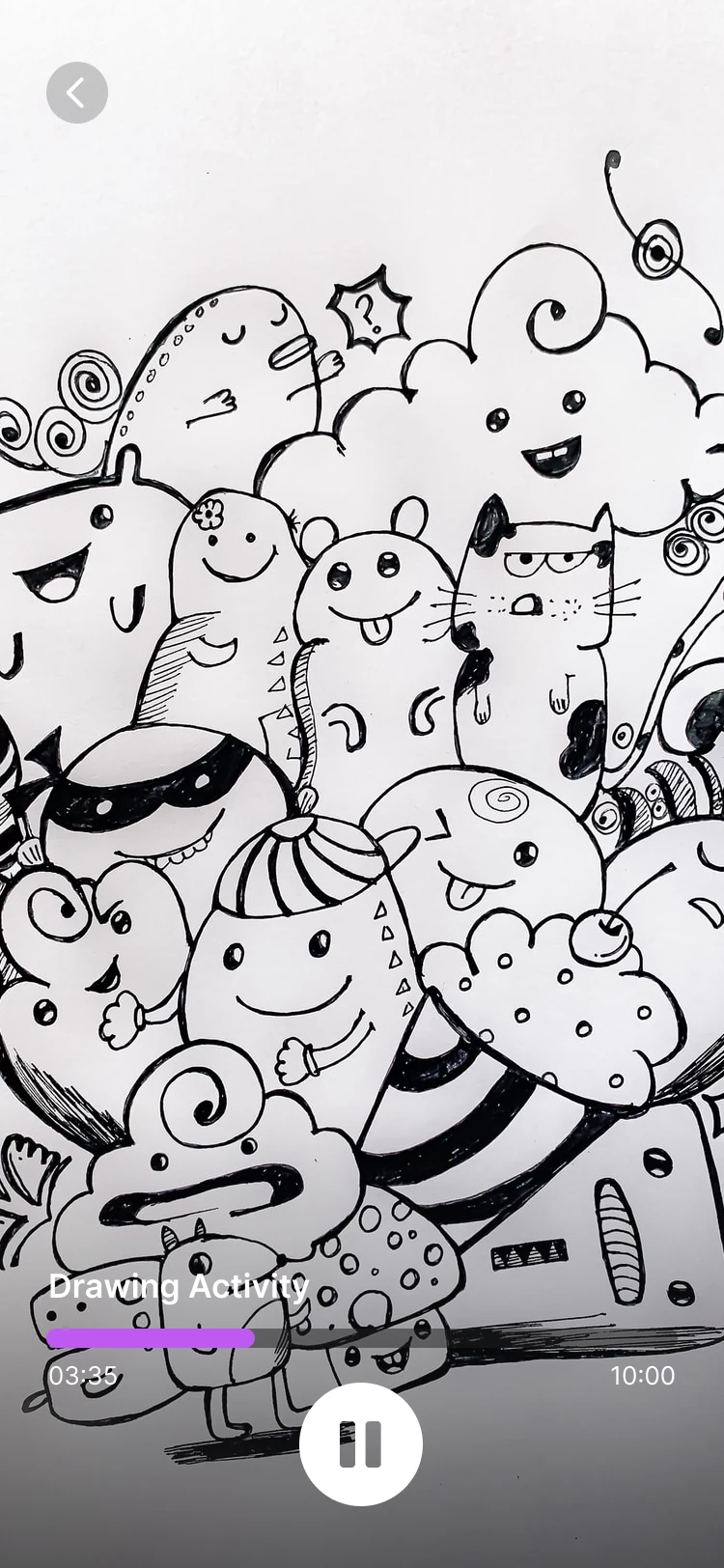
Original screens from the iOS app.
Original explorations: an anatomical view with a bar for each dimension, a radar of the dimensions together, and a compact overview.
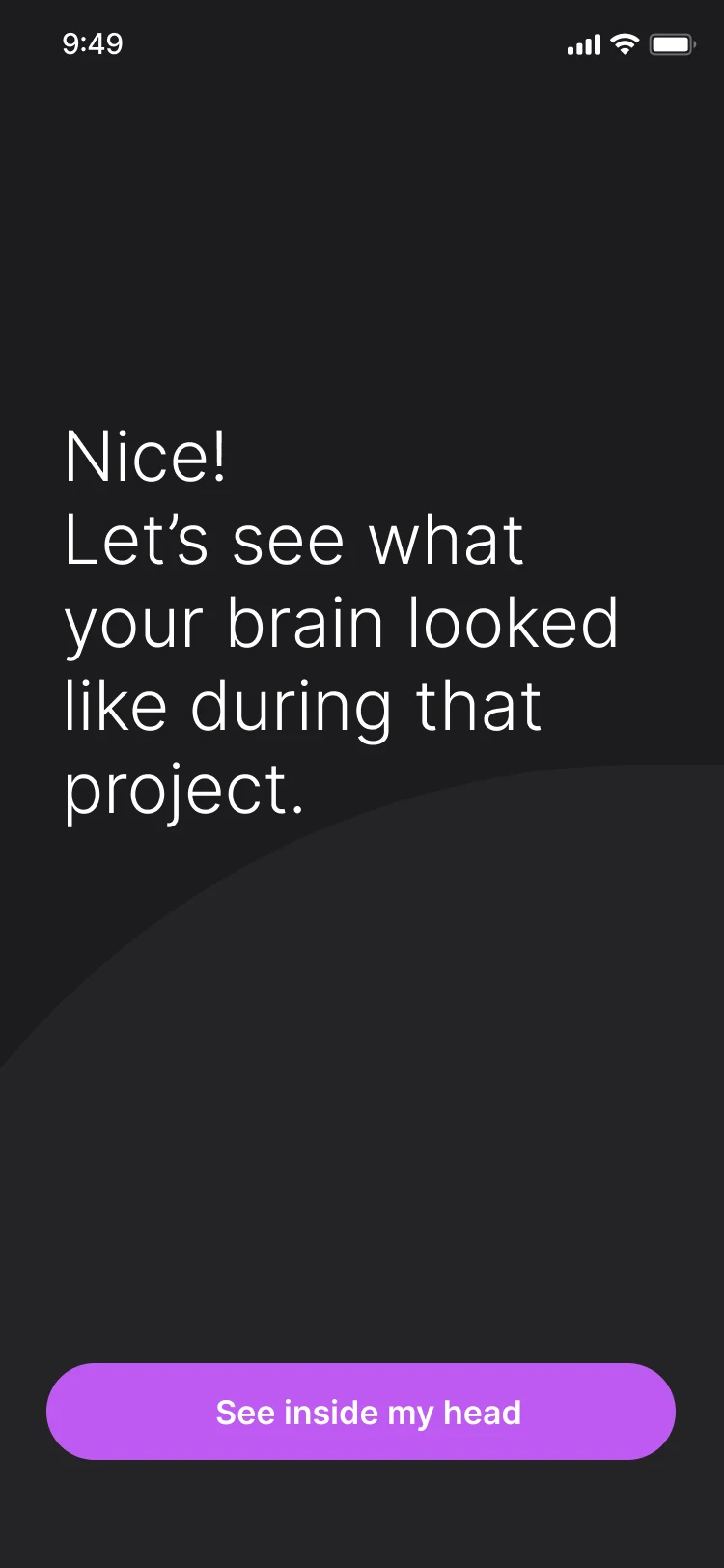
A simple invitation
Celebrating a successful launch,
now funded as Atlas.
The research, original UI and pitch deck I designed helped secure the seed round. The company went on to launch as Atlas in 2026.
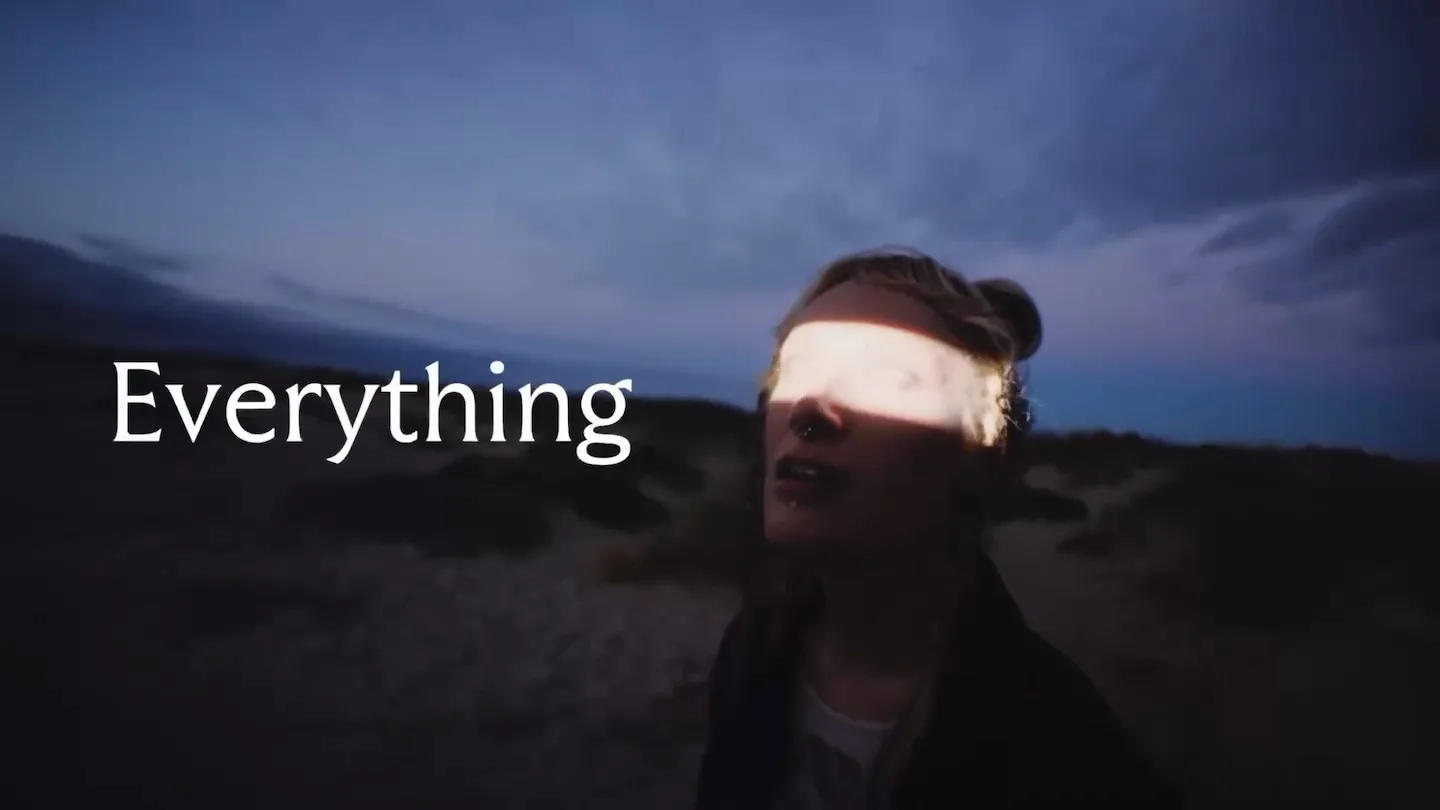
Launch film by Atlas ↗ (2026)
Credits
- Role
- Lead designer, discovery through definition
- Work
- Initial UX and research, original UI, data visualization, investor pitch deck
- Worked with
- The founder and a small engineering team
- Platform
- iOS app and EEG headband
- Stage
- Seed round
- Launch film
- Atlas, 2026